$800-a-day penalty threatens to bleed investigative reporter dry as explosive legal fight escalates
$800-a-day penalty threatens to bleed investigative reporter dry as explosive legal fight escalates
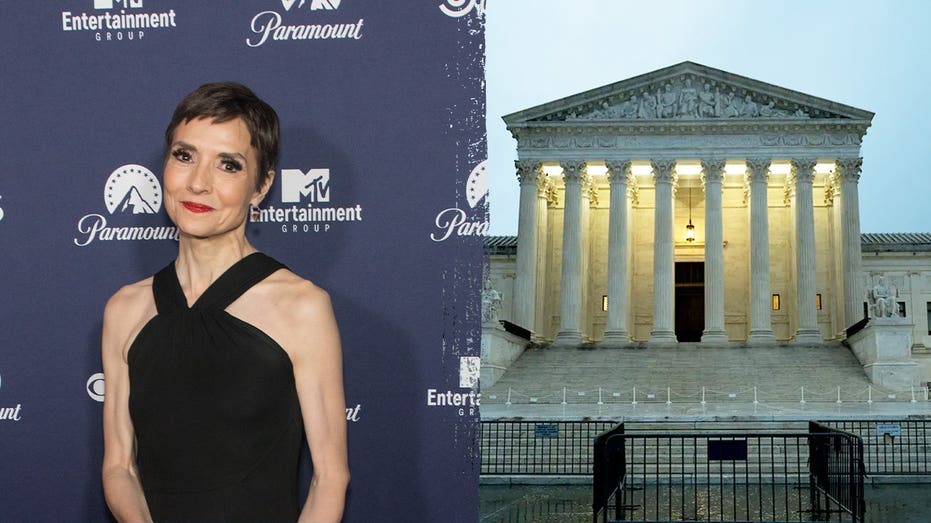
Former Fox News investigative reporter Catherine Herridge is asking the Supreme Court to protect her confidential sources after a federal court ordered her to identify who helped expose a woman's alleged ties to China's military.
The outcome of the case could dramatically reshape the legal protections afforded to journalists working in the U.S. under the First Amendment.
Herridge was held in contempt and ordered to pay $800 per day for refusing to reveal sources behind her 2017 reporting on Yanping Chen, a Chinese American businesswoman who operated a university attended by U.S. military personnel. Her reporting raised questions about Chen's alleged past as a colonel for the People's Liberation Army (PLA) of China and the potential exposure of sensitive information about American service members.
The Department of War subsequently cut off military tuition assistance funding to Chen's university following a national security review, according to a filing by Herridge's legal team. The school had been receiving approximately $200,000 a month in taxpayer-funded tuition assistance.
NEW YORK TIMES BLASTS ABUSIVE TRUMP SUBPOENAS TARGETING REPORTERS SOURCES
Now Chen, who was investigated by federal authorities but never charged with a crime, is pursuing a lawsuit against the federal government, alleging that officials improperly disclosed her private records to Herridge in violation of the Privacy Act. She has sought to compel Herridge to identify her sources as part of that litigation.
The dispute has reached the Supreme Court, where Herridge's attorneys are asking the justices to reconsider the legal standard used to force journalists to disclose confidential sources in civil cases.
Her legal team argues that the lower courts failed to adequately weigh the broader circumstances of Chen's lawsuit, including the Pentagon's national security findings and whether Chen can ultimately prevail in her claims against the government.
The case also exposes a longstanding disagreement among federal appeals courts over the scope of the reporter's privilege, an issue the Supreme Court has not comprehensively addressed in more than five decades.
Herridge's original investigation, published while she was working at Fox News in 2017, examined Chen's background and her operation of the University of Management and Technology in Arlington, Virginia, which enrolled U.S. military personnel using Defense Department tuition assistance.
The reporting included photographs appearing to show Chen in a Chinese military uniform and examined allegations that she had concealed her previous military service when applying for U.S. immigration benefits.
It also raised concerns about the university's collection of information on American service members, including details about their military training and professional backgrounds. A whistleblower interviewed for the investigation alleged that information stored on the school's computers could be accessed remotely from China.
WASHINGTON POST BOASTS IT STARED DOWN UNWARRANTED JUSTICE DEPARTMENT SUBPOENA