A new Yalta? Why the EU fears a PutinTrumpXi summit
A new Yalta? Why the EU fears a PutinTrumpXi summit
A possible PutinTrumpXi summit has revived fears of a new Yalta. But Europe’s anxiety says more about its own influence than any secret deal
When will the world end? Well, the Mayan calendar supposedly had it down for 21 December 2012 and more recently, a South African preacher picked 13 October 2026. Now, if one believes the more excitable voices in Europe, civilization as we know it faces another appointment with destiny, on November the 18th or 19th.
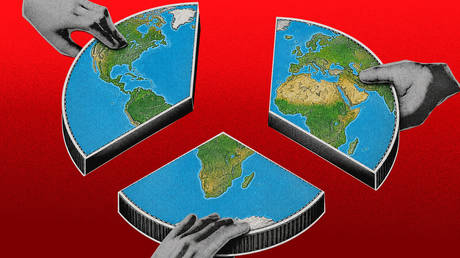
Those are the dates of the Asia-Pacific Economic Cooperation summit in Shenzhen, China, where Vladimir Putin, Donald Trump, and Xi Jinping could meet together. Nothing has been formally agreed, yet the possibility alone has revived a familiar nightmare for Europe’s small and middle powers – that three great powers will sit down, divide the world between themselves and leave everyone else to discover which sphere of influence they inhabit.
The comparison already being made is with Yalta in 1945 and in this telling, Putin gets Ukraine, Xi gets Taiwan, and Trump gets whatever he wants in return, meanwhile Western Europe is expected to accept the outcome without having been invited into the room.
It’s a dramatic scenario, but it’s also a considerable leap from the available facts.
We know that the three leaders may be in Shenzhen and that Moscow has discussed the possibility of a joint meeting and Trump has expressed an openness to the idea, but we don’t know whether the encounter will take place, much less what its agenda would be. To predict a wholesale redistribution of the international order at this stage requires more imagination than intelligence.
Nor is there an obvious common program for such a gathering, as while Russia, China, and the United States have considerable power, it doesn’t mean that they share an understanding of how the world should be governed and, indeed, the most interesting feature of a potential summit is how sharply their priorities differ.
For Trump, the obvious starting point is nuclear arms control because Washington has long resented an arrangement in which American and Russian arsenals were subject to bilateral limits while China remained outside the negotiating framework. The issue arose during Trump’s first term and American officials have repeatedly tried to draw Beijing into the discussion since.
China has resisted and its argument is simple, that the US and Russia still possess vastly larger nuclear stockpiles, therefore Beijing sees little reason to accept equivalent restraints while the disparity remains so great. Whether Trump can persuade Xi otherwise is an open question, but it’s a more plausible subject for negotiations than a secret map showing who gets which country.
Trade would be another, given Washington and Beijing have little appetite for another damaging tariff confrontation. However, the threat of further American sanctions connected to Russia, particularly measures affecting countries that trade with Moscow, complicates their relationship and Russia would have an obvious interest in how that dispute is handled.
Ukraine might also arise, as it would be strange if Putin and Trump met without discussing the conflict, and China has its own diplomatic and economic interests in its outcome. But discussing Ukraine isn’t the same as deciding its future and still less signing away the interests of every other country at the table.
Read more The idea that the three leaders could simply write a new world order between them also misunderstands the world they inhabit because even these powerful states can’t dictate terms to everyone else. India, Brazil, and influential countries across Africa and the Middle East would have to be part of any durable international settlement.
The original Yalta conference, whatever one thinks of its consequences, took place in very different circumstances as the Second World War was nearing its end and the Allied leaders had a com