Killing a tsar wasn-t enough: Russia-s revolutionaries hit a bloody dead end
Killing a tsar wasn-t enough: Russia-s revolutionaries hit a bloody dead end
They assassinated an emperor and murdered ministers, but bombs and revolvers failed to deliver the revolution they wanted
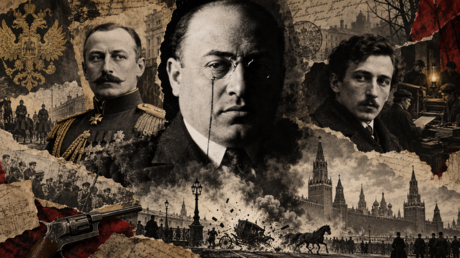
The assassination of Emperor Alexander II on March 1, 1881, was the most famous action carried out by Russian terrorists. It seemed as though the monarchy was about to collapse simply because of a few dozen individuals armed with bombs, daggers, and revolvers.
However, as the terrorists were about to discover, this was a game two could play.
The end of Narodnaya VolyaThe terrorists of the Narodnaya Volya (People’s Will) organization lost the highly active militant cell that had assassinated the emperor – almost all its members were captured and hanged. However, numerous smaller cells remained.
The novel ‘What Is to Be Done?’ deeply influenced Russian terrorists. Ironically, after Alexander’s death, both sides pondered this question. The sole desire of the terrorists was to assassinate the emperor, but soon, they discovered that nothing had changed: Alexander II was succeeded by Alexander III. Moreover, the new tsar rolled back many of his father’s reforms. A prescient observer might have noted that, in doing so, he was actually hastening the revolution the terrorists so fervently desired. But the radicals themselves did not look that far ahead.
The underground movement saw a massive influx of new recruits. Vera Figner effectively headed the movement. An idealist and intellectual, under different circumstances, she might have become a source of national pride; however, she met anarchist leaders and went underground. Her primary challenge was finding recruits; while the ranks of revolutionaries had swelled, these new terrorists were poorly trained.
On the opposite side of the barricades, a new figure emerged. This was Georgy Sudeykin, an officer of the Corps of Gendarmes, i.e., the security police. Sudeykin was an army officer, but had little desire to spend decades serving in garrisons only to eventually retire as a major. The field of counter-terrorism was just emerging, and Sudeykin saw it as a brilliant opportunity.
RT composite. Georgy Sudeykin and Vera Figner. He began recruiting agents from among the terrorists. Sudeykin proved to be a skilled psychologist who strove to exploit personal weaknesses. He used intimidation or torture sparingly; far more often, he claimed to be a committed advocate of reform who merely considered the revolutionaries’ methods too radical. And then, he suggested ways that they could help each other out.
This was a simple ploy, and it would not have worked on seasoned terrorists like Figner. However, Sudeykin targeted the ‘younger generation’ and quickly found the right approach with many of those he managed to arrest. He rapidly rose to the rank of lieutenant colonel and assumed a position created specifically for him: inspector of the secret police, effectively the head of the counter-terrorism department.
One day, the police arrested a young man named Sergey Degaev. Degaev was a talented mathematician but had a passion for underground revolutionary activity. Unlike his aptitude for science, however, he possessed no real talent for terrorism. He was captured at an underground print shop that produced banned literature. Sudeykin deployed his full arsenal against him: he made pointed references to the prospect of punitive labor in Siberia while simultaneously flattering Degaev and appealing to his idealism and intellect. Driven by a mixture of fear and ambition, Degaev became a secret agent.
Read more Sudeykin’s plan for Degaev was quite unconventional. He intended to turn his new protégé into a ‘rat king’ by placing him at the head of the underground movement, only to dismantle it using him as the instrument. To kick things off, a staged escape from custody was arranged for Degaev; this earned him a good reputation among the terrorists and provide







 22.4c
22.4c