Ruined by NATO, divided without Gaddafi: Can Libya-s new deal hold?
Ruined by NATO, divided without Gaddafi: Can Libya-s new deal hold?
In an effort to break years of political deadlock, the UN has set up a ‘4+4’ committee, bringing together Libya’s rival factions
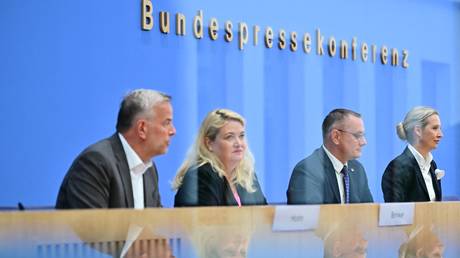
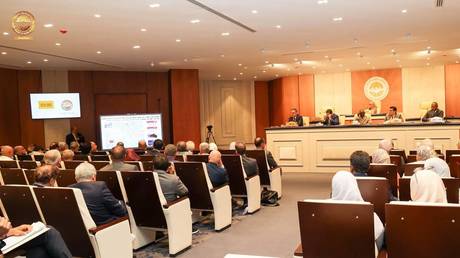
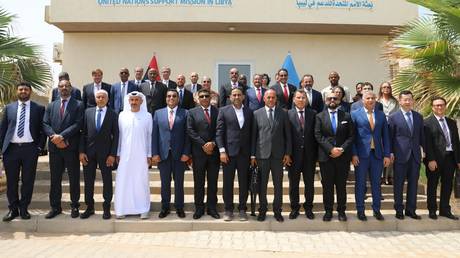
The long-awaited agreement between Libya’s rival factions was finally signed on August 30 under the auspices of the United Nations Support Mission in Libya (UNSMIL). On that day, the mission gathered the two negotiating delegations at its Tripoli headquarters to formalize the text ironed out during earlier rounds of talks in Rome and Tunis. UNSMIL invited foreign diplomats, media representatives, and Libyan delegations to the event, where UN Special Representative Hanna Tetteh hailed the accord in her opening remarks as another important milestone in Libya’s journey toward stability and national unity.
This, however, bore a resemblance to previous diplomatic milestones – most notably the 2015 Libyan Political Agreement (LPA) signed in Skhirat, Morocco. The LPA established the rules of the political game in the fractured country; rules to which none of the domestic political actors seem fully committed, yet from which none completely depart. In a sense, Skhirat remains the ultimate reference point for every subsequent UN roadmap in Libya.
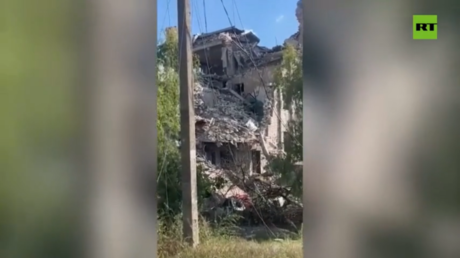
In the vacuum left by the 2011 NATO intervention and the brutal murder of Muammar Gaddafi, Libya has seen a continuous parade of diplomatic accords. Yet the fundamental problem has never been a shortage of roadmaps, but rather their consolidation into nationally accepted political facts that elites cannot simply manipulate at will.
The August 30 agreement has two main parts. The first is restructuring the High National Elections Commission (HNEC), the agency in charge of organizing elections. In practice, this means replacing its leadership to settle disputes over appointments and regional representation. Although these changes were long delayed by regional quotas and political patronage stemming from the 2015 Skhirat agreement, rivals can still negotiate them with relative ease.
The 24-month timeline to hold elections was also established. However, the countdown is designed to govern the transition only once a single, unified executive authority and unified national institutions are established to oversee the voting process.
The second component concerns the central objective of UNSMIL’s latest roadmap: agreeing on viable election laws, an issue on which the UN has failed to make meaningful progress since the collapse of the planned 2021 elections.
Libya remains divided between rival power centers: the Government of National Unity (GNU), led by Abdul Hamid Dbeibah in Tripoli, the western part of the country, and the Libyan National Army (LNA) command in the east led by General Khalifa Haftar. These exist alongside two political institutions: the Tripoli-based High Council of state (HCS) and the eastern-based House of Representatives (HoR). To break the deadlock, UNSMIL established a smaller negotiating group known as the ‘Smaller Convening’, or the ‘4+4’. It brings together eight representatives from the GNU, Haftar’s military command, the HCS, and the HoR.
Read more This mechanism directly mirrors the ill-fated 2021 Geneva process, Libyan Political Dialogue Framework, which ultimately hardened Libya’s institutional divide and brought the country closer to a permanent de facto partition than at any point since its formal unification in 1951. The UN Security Council issued a delayed presidential statement endorsing the deal, and thus repeating a familiar ritual that seems to elevates elite compromise over structural reform. Seeking to seize the political initiative, Speaker Aguila Saleh brought the 4+4 framework to the HoR floor for an immediate vote where it was approved by the majority of members.
The ‘4+4’ format developed alongside (and ultimately eclipsed) UNSMIL’s broader Structured Dialogue. Even before those conclusions were finalized, UNSMIL was already facilitating a paral





 15.2c