This man defied Britain, France and Israel and his legacy still animates Africa
This man defied Britain, France and Israel and his legacy still animates Africa
Gamal Abdel Nasser proved that true independence is won through active solidarity
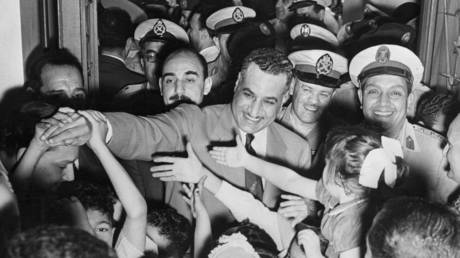
When Gamal Abdel Nasser led the Free Officers Movement to power in 1952, Africa’s political landscape was mostly vacant – with independent nations limited to Egypt, Ethiopia, Liberia, Libya, and apartheid-ruled South Africa. Yet, by his death in September 1970, more than 40 African countries had achieved sovereignty. This monumental shift was no coincidence.
Under Nasser, Cairo transformed into the hub of global anti-colonialism – a diplomatic base and logistics center for liberation struggles from Algeria’s National Liberation Front (FLN) to movements in the Congo, Angola, and Southern Africa. By exporting the ideals of the July 23 Revolution, Egypt helped engineer Africa’s decolonization wave, anchoring a Pan-African momentum that forged the Organization of African Unity (OAU) and championed a multipolar world order through the Non-Aligned Movement.
Marking its 74th anniversary today, the legacy of the July 23 Revolution underscores Nasser’s early recognition that the survival of Egypt’s domestic development programs and regional initiatives required strategic depth. Mapping out Egypt’s geopolitical destiny in his 1954 manifesto, The Philosophy of the Revolution, Nasser conceptualized Cairo’s foreign policy within three interconnected : the Arab world, the African continent, and the Islamic sphere.
While the Arab world was bound by a shared language and history, the African sphere offered the most fertile ground for a systemic challenge to European empires. Nasser argued that a colonized Africa left Egypt’s southern flank dangerously vulnerable. Conversely, a liberated continent would secure Cairo’s vital interests – including the crucial waters of the Nile – and solidify Egypt’s role as the vanguard of the developing world. Meanwhile, the Islamic sphere provided the cultural and civilizational network necessary to mobilize transcontinental solidarity against foreign hegemony, ensuring that Egypt never stood isolated against imperial powers.
To turn this geopolitical vision into reality, Nasser transformed Cairo from a regional capital of cinema and arts into the operational center of African decolonization. Crucially, arts and literature flourished alongside these movements. The city evolved into a dual Pan-Arab and Pan-African sanctuary for liberation fronts that European empires were actively trying to crush.
From seeking military backing for the African National Congress (ANC), to Jomo Kenyatta’s representatives from Kenya, and Amilcar Cabral’s PAIGC (African Party for the Independence of Guinea and Cape Verde) vanguard, the architects of African revolution found resources and safety in Egypt’s capital. However, subverting entrenched empires also required the imperial monopoly on information to be broken. Cairo utilized its reputation as the Arab Hollywood, leveraging the continent’s latest pop music and poetry to draw millions of listeners to Sawt al-Arab and Radio Cairo. Broadcasting across the continent in dozens of indigenous languages (including Swahili, Hausa, Amharic, and Somali), Egypt bypassed colonial censors to deliver a message of self-determination directly to the African masses.
Cairo under Nasser utilized its diplomatic infrastructure as an instrument of liberation, most notably through its backing of Algeria’s . Central to this strategy was the African Association, established in 1955 in Cairo’s Zamalek district under Nasser’s close advisor, Mohamed Fayek. The Association functioned as a diplomatic center for exiled vanguards. When European imperial rulers legally erased freedom fighters by revoking their citizenship, the Nasser government stepped in to issue official Egyptian travel documents and stipends.
Read more This infuriated colonial powers, culminating in October 1956 when Fr







 20.5c
20.5c