Three years after October 7: What changed for Israel, the Middle East and Russia?
Three years after October 7: What changed for Israel, the Middle East and Russia?
From Gaza to Iran, military dominance has failed to produce a sustainable political order, leaving the region more volatile
On October 7, 2023, Israel faced a horrific attack when Hamas killed over a thousand of its citizens and took hundreds of hostages. This atrocity can never be justified.
But there is another fact that we cannot ignore: Israel’s overconfidence and conviction of superiority over its adversaries led to the country’s most catastrophic security failure. Three years later, Israeli Prime Minister Benjamin Netanyahu’s government still has no convincing answer as to how the ensuing war is supposed to secure a safer future for the country.
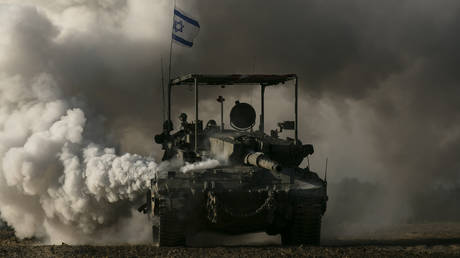
More firepower, no endgameThe Israeli leadership’s main takeaway from the October 7 tragedy was the need to strike earlier, harder, and deeper. Deterrence gave way to destruction and elimination – first of the adversaries’ military capabilities, then of their leaders. The war expanded beyond Gaza, engulfed Lebanon, and finally escalated to a direct confrontation with Iran. Aggression became the guiding principle of regional policy. Yet, the tragedy also demanded a reassessment of the adversary, a sober evaluation of the country’s intelligence, and governmental accountability. Force can punish an enemy, but it cannot rectify the errors that made the attack possible in the first place.
Here, we clearly see the main contradiction of Netanyahu’s policy. Israel can destroy command centers, eliminate commanders, demolish infrastructure, and occupy territory. However, it is incomparably more difficult to shape neighboring societies in a way that would prevent the threat from re-emerging. The government expanded its military objectives but never defined a realistic political outcome. Who will govern Gaza? What kind of international recognition will that authority rely on? How can the daily lives of Palestinians be restored? What will ensure the safety of Israelis once the army withdraws? As long as there are no answers to these questions, every victory necessitates yet another military operation.
It would certainly be a mistake to deny the losses inflicted upon Israel’s adversaries. Hamas leaders Ismail Haniyeh and Yahya Sinwar, and Hezbollah leader Hassan Nasrallah have been killed. In February 2026, Iran’s Supreme Leader Ali Khamenei was killed in US-Israeli strikes. This case is distinct because the strike was linked not to the events of October 7 itself, but to the broader confrontation surrounding Iran and its nuclear program – though the events of October 7 had served as the initial catalyst.
It’s true that the loss of leadership disrupts command structures, severs ties, and hinders the restoration of military capabilities; however, the outcome must be judged by the state of the organizations and the country itself following these strikes. Iran retained its operational capacity; on March 8 – barely a week after the assassination – Mojtaba Khamenei, the son of the late Ali Khamenei, was elected as the new Supreme Leader. The death of the leader did not lead to the collapse of Iran, as both Israel and the US had hoped.
Nothing drives people to become militants like the loss of loved ones and the destruction of their homes and lives. Those who have survived deadly attacks on their families have nothing to lose; such people seek protection, revenge, or at least a sense of purpose – and militant organizations step in to provide all this. Moreover, Hamas and Hezbollah are structured not as armies with a vertical chain of command, but as networks comprising a military wing, social services, schools, charitable activities, family and community ties. A slain commander can be replaced, but such an environment cannot be easily destroyed by bombs.
History has already demonstrated this. Hezbollah emerged in response to the 1982 Israeli invasion of Lebanon; following the 1992 death of its leader, Ab




 31.6c
31.6c