US-Russia cooperation in Arctic: Why energy-hungry economies have big hopes
US-Russia cooperation in Arctic: Why energy-hungry economies have big hopes
Access to additional LNG volumes that northern frontier provides remain crucial for countries such as India to enhance energy security
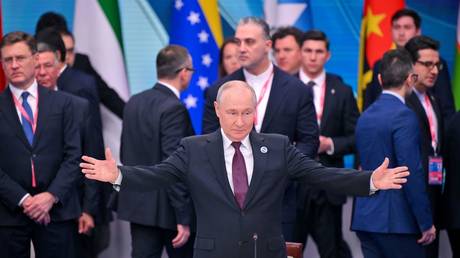
Speaking at the --> in Moscow on October 27, President Vladimir Putin warned that excluding Russia from global gas markets would raise costs for consumers. He also revealed discussions with potential American partners for exploring cooperation in Arctic gas development. This is happening even as restrictions on Russian energy projects remain in place.
Putin’s remarks come amid continued disruption to LNG supplies. has extended the suspension of certain deliveries into December, while rose 23% to $8.5 billion during April-September, despite volumes increasing by just 4.4%.
For import-dependent economies such as India, the question is whether prospective Arctic cooperation could eventually expand supply options, or whether sanctions, pricing and transportation constraints will keep that possibility beyond commercial reach.
Arctic gas cooperation meets commercial realityRussia’s interest in Arctic cooperation extends beyond developing its vast gas reserves. Following Putin’s October 27 remarks, Deputy Prime Minister Alexander Novak clarified that concerned potential joint development of gas fields and LNG liquefaction facilities, including opportunities involving Russian infrastructure.
One possible example has already surfaced. has acknowledged agreements to provide technology for the proposed $25 billion Polar Train LNG project in Alaska. The venture aims to use Russian liquefaction infrastructure for American gas exports, although its implementation remains subject to regulatory approvals.
Russia and the US compete for LNG buyers, yet Arctic development could give their energy companies reasons to work together. Russia could find opportunities to deploy its Arctic expertise and attract investment, while American developers could benefit from technology and infrastructure suited to challenging northern conditions.
Yet commercial interest alone cannot overcome the obstacles facing Arctic LNG development. in November 2023, subsequently extending restrictions to companies and vessels involved in supplying equipment and transporting LNG from the project.
In September, the sought approximately $1 billion in damages from South Korea’s Hanwha Ocean in an arbitration dispute over cancelled contracts for specialized ice-class LNG carriers, highlighting the shipping complications facing Russian Arctic gas development.
The regulatory environment remains equally complicated. On October 16, under the Graham Act, but the decision did not automatically remove restrictions imposed separately on Russian LNG projects.
Beyond regulatory approvals, Arctic operations depend on a limited fleet of specialized carriers capable of navigating ice-covered waters. Seasonal conditions further restrict their deployment, making transportation capacity a critical consideration for new projects.
India’s LNG security faces an Arctic testIndia’s response to recent LNG disruptions offers an indication of how importing economies may approach future supply arrangements. According to data for the month of October, the US, Oman and Nigeria accounted for 68% of India’s LNG imports between March and September, against 25% a year earlier. fell sharply before shipments began recovering this month.
Read more India’s changing LNG suppliers expose a distinction between diversifying sources and reducing exposure to international prices. With more than a third of its LNG reportedly sourced through spot purchases, Indian buyers remain exposed to price fluctuations even when physical supplies are available. Adding Russian Arctic LNG to India’s supplier portfolio would not necessarily change that exposure unless the contracts offered a different pricing structure or greater protection against international price swings.
The International Energy Agency (IEA) projects cou