WATCH French student protests descend into chaos
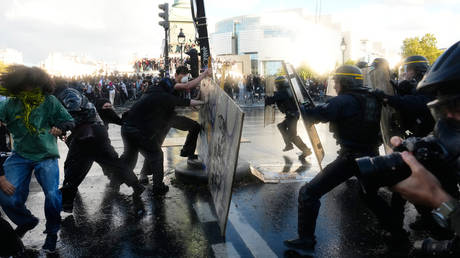
WATCH French student protests descend into chaos
Officers deployed tear gas and batons against youth protesting education cuts and demanding better schools
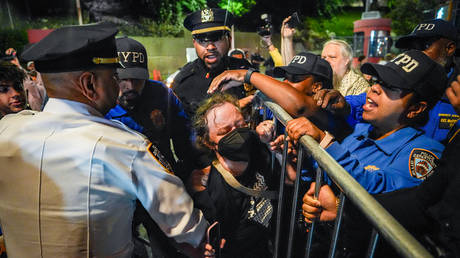
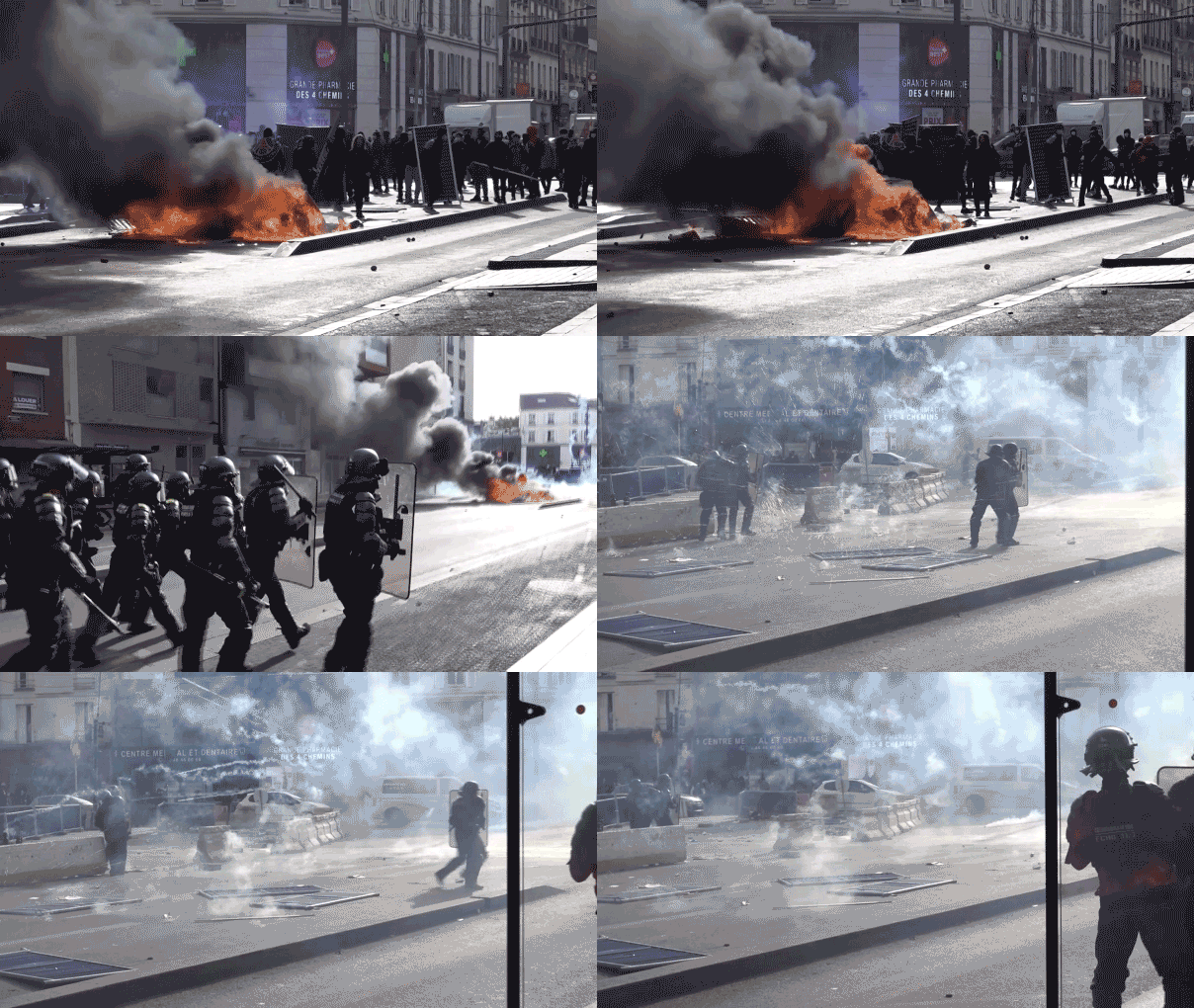
French riot police has deployed tear gas and water cannon, as well as charging with batons to disperse crowds of young protesters in central Paris.
On Thursday, student demonstrations and labor union protests continued for a fifth week because of anger over underfunded schools, teacher shortages, and planned government spending cuts.
The unrest began in mid-September at a high school in Creteil, near Paris, where students protested unfilled teaching posts. The movement subsequently spread nationwide, with demands for smaller classes, improved school facilities, and more funding for public education. The demonstrations have also coincided with labor union rallies against proposed budget cuts aimed at reducing the deficit.
Videos circulating online show violent clashes between thousands of protesters and riot police in the French capital. Officers wielded batons and deployed water cannon and tear gas in an effort to break up the raging crowds of young people.
The French government said Thursday that 24 high schools across the country had sustained significant damage during the protests. The authorities also reported that 375 schools were fully or partially closed on Thursday. The Justice Ministry has estimated the cost of repairing the damaged school buildings and street infrastructure nationwide at several million euros.
Manifestation lycéenne et étudiante : la tension ne retombe pas sur la place de la Bastille, les forces de l'ordre font usage d'un canon à eau face aux manifestants.
— CLPRESS / Agence de presse (@CLPRESSFR) According to the Interior Ministry, 71,500 people took part in demonstrations across the country, including 24,500 in Paris. The CGT trade union, however, put the turnout at more than 130,000, nearly twice the official figure.
Manifestation lycéenne et étudiante : retour au calme sur la place de la Bastille, mais des tensions persistent dans les rues adjacentes avec des charges des forces de l'ordre et l'usage de grenades lacrymogènes.
— CLPRESS / Agence de presse (@CLPRESSFR) Protests are being fueled by the government’s proposed 2027 budget unveiled last week, which would increase education funding by €1.2 billion ($1.35 billion) while eliminating another 1,588 teaching posts. Education Minister Edouard Geffray has defended the planned cuts, citing a decline in student numbers.
Manifestation lycéenne et étudiante : tensions toujours en cours place de la Bastille, nouvelle charge des forces de l'ordre et usage de gaz lacrymogène pour repousser les manifestants.
— CLPRESS / Agence de presse (@CLPRESSFR) Labor unions oppose the wider austerity plan, which calls for €43 billion in savings in 2027. The planned measures include freezing public-sector wages and most pensions, holding social benefits at current levels, and reducing funding for public services, prompting unions to warn that low-income households and public-sector workers would be hit the most.
Manifestation lycéenne et étudiante : situation très tendue sur la place de la Bastille. Affrontements, charges des forces de l'ordre et usage de gaz lacrymogène pour disperser les manifestants.
— CLPRESS / Agence de presse (@CLPRESSFR) A broader wave of protests across Europe has seen demonstrations on issues ranging from education funding and budget cuts to housing costs and living standards. Student protests have also occurred in Belgium, Italy and Greece, while tens of thousands rallied in Spain over housing affordability and evictions. Although they are not part of a coordinated Europe-wide movement, the protests reflect growing public discontent over government policies across the continent.



 17.6c
17.6c