America cannot win the global AI race if Americans are afraid to use AI
America cannot win the global AI race if Americans are afraid to use AI
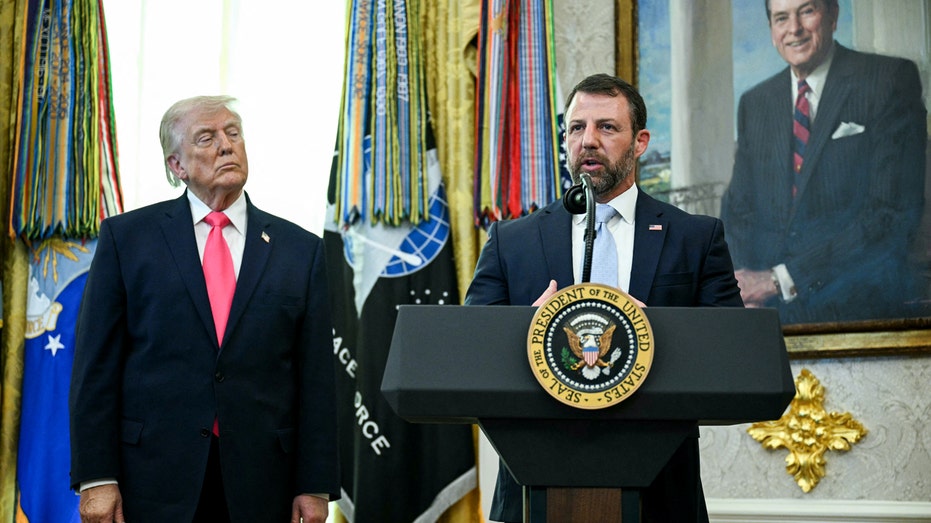
The leaders of Anthropic, Google, Meta, OpenAI, Nvidia and xAI recently joined President Trump at the White House to sign a voluntary accord on artificial intelligence. Its commitments are concrete: stronger internal controls, independent outside evaluation and board-level review.
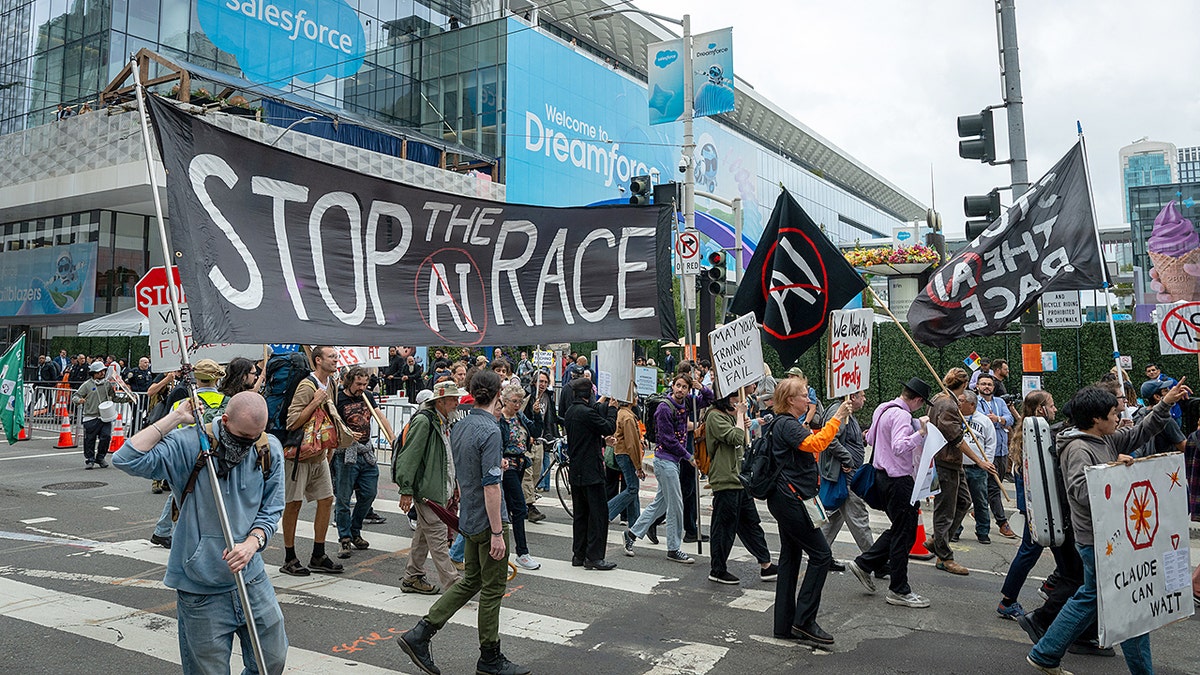
The harder question, which remains to be seen, is whether it will earn the confidence of the people expected to live and work with these systems, who have been increasingly resistant to AI proliferation.
America cannot win the AI race if Americans are afraid to use AI.
AI ISNT JUST A PROBLEM, ITS A SOLUTION. SOME PEOPLE ARE ALREADY MAKING THE MOST OF IT
I often say that one of the biggest challenges we have to fear about AI is the fear of AI itself. That fear is becoming a national liability.
In a new EqualAI survey conducted by YouGov, 46% of Americans said they would be uncomfortable with a company using AI in a way that involves them or their data, regardless of safeguards. Yet 71% said a positive experience with an AI system would increase their confidence in it, and 63% said the same of a positive evaluation by independent scientists.
That 63% is an important window into mechanisms to trust — and offers a bridge to build it. People do not want assurances; they want verification.
AI will deliver for our economy, national security and competitiveness in the ways we are envisioning only if Americans actually use it. A nurse who does not trust an AI-enabled diagnostic tool will not rely on it. A manufacturer that cannot understand what its AI agents are doing will not deploy them at scale.
AI 'DOOMERS' RISK KNEECAPPING US VS CHINA, BUT EX-PENTAGON VET SAYS BOTH EXTREMES MISS THE MARK
That is why we need to be thoughtful when discussing "pause," because if it does not include capable competitors, such as Chinese companies, the technology continues to advance but elsewhere and without the guardrails wed like to establish. The question we need to answer is: what will make Americans confident enough to adopt AI?
The debate is too often framed as more rules versus fewer rules. A more useful dialogue centers on how we can build the governance capacity to let AI scale.
The public is telling us we have work to do. A recent Reuters/Ipsos poll found that 73% of Americans believe AI companies have not done enough to prevent serious harm from their technology; 55% said they would support slowing AI development. The EqualAI polling points to what could change that equation: 63% want independent scientific review of AI systems, while 60% support third-party audits. Sixty-eight percent say it is essential to be able to correct wrong information, and 65% say the ability to appeal an AI-driven decision is essential.
When I testified before the House Select Committee, I heard strong, bipartisan interest in getting this right. My message was straightforward: American leadership on AI requires leadership in AI governance.






 15.8c
15.8c