Blue states set to trigger fresh minimum wage hikes with pay floors more than double federal rate
Blue states set to trigger fresh minimum wage hikes with pay floors more than double federal rate
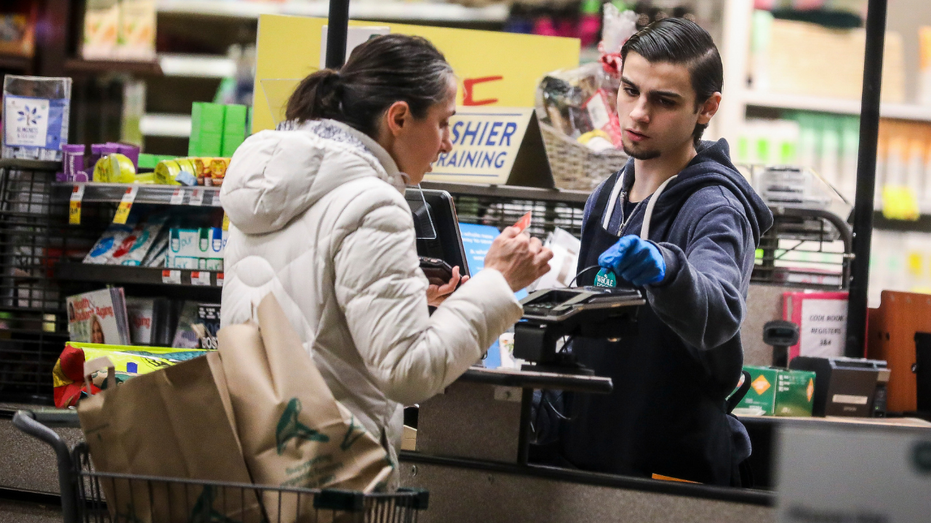
Workers across several Democratic-led states are set to ring in 2027 with another pay bump, widening an already sizable gap between state minimum wages and the federal floor of $7.25 an hour.
Washington, California and Connecticut will all raise minimum wages that already top $17 an hour beginning Jan. 1, while New Jersey and Michigan will also hike their wage floors — widening the gap with the federal minimum of $7.25 an hour.
Washington will lead the pack at $17.73 an hour, up 60 cents from its current $17.13 rate. Connecticuts minimum wage will rise from $16.94 to $17.48, while from $16.90 to $17.40.
New Jersey will increase its minimum wage by 56 cents to $16.48 an hour for most workers, while Michigan is slated for one of the largest jumps, rising from $13.73 to $15 an hour.
AOC-BACKED $30 MINIMUM WAGE PLAN COULD BACKFIRE IN UNEXPECTED WAYS, EXPERTS WARN
The hikes come as several Republican-led states have also pushed their wage floors well above the federal rate, though they remain below the highest-paying blue states. Floridas minimum wage reached $15 an hour on Sept. 30 and will remain there through the end of 2027, while Missouri is also at $15. Nebraska will increase its minimum wage from $15 to $15.26 on Jan. 1.
increase will come as Seattle pushes its own wage floor even higher. The citys minimum wage is slated to rise to $22.14 an hour in 2027, nearly $4.50 above the new statewide rate.
Seattles wage requirements have also become a flashpoint in the debate over the costs facing local businesses. Beginning in 2025, all employers in the city, including small businesses, became subject to the same inflation-adjusted minimum wage. Some restaurant owners who later closed their businesses cited rising labor costs among the financial pressures they faced.
ECONOMIST WARNS THOUSANDS OF VIRGINIA JOBS AT RISK AFTER MINIMUM WAGE HIKE SIGNED BY SPANBERGER
Washingtons minimum wage is tied to inflation under state law, with the wage floor recalculated each year rather than requiring lawmakers to approve a new increase.
Washington voters approved a measure in 1998 that raised the minimum wage and, beginning in 2001, tied future increases to inflation.
Voters approved another measure in 2016 that set wage increases through 2020. Since 2021, the minimum wage has again risen annually with inflation, with the goal of keeping workers pay in step with rising prices.
Each September, the Washington Department of Labor & Industries calculates the following years rate based on changes in the CPI-W. The new rate is announced Sept. 30 and takes effect Jan. 1.
"Democrats appear to be doing everything they can to make the business climate in Washington more untenable," Seattle Red host and conservative commentator Jason Rantz told Fox News Digital.
DOWNTOWN SEATTLE LOST 30,000 JOBS, BILLIONS IN OFFICE VALUE SINCE 2020 PAYROLL TAX: NEW REPORT FINDS
"Its not just the high cost of labor — Seattle is now going to be over $22 an hour — but its the high crime, open-air drug use, new income tax that targets pass-through businesses, and over regulation that make operating businesses more difficult than it should be," Rantz said.
"Our unemployment rate is higher than the national average and were losing tech jobs left and right," he added. "Democrats have no answers. Theyre just making their problems worse."
The wage hike c

 15.8c
15.8c