GORDON SONDLAND: France is burning, Europe's broke, and the revolution it really needs isn't violent
GORDON SONDLAND: France is burning, Europe's broke, and the revolution it really needs isn't violent
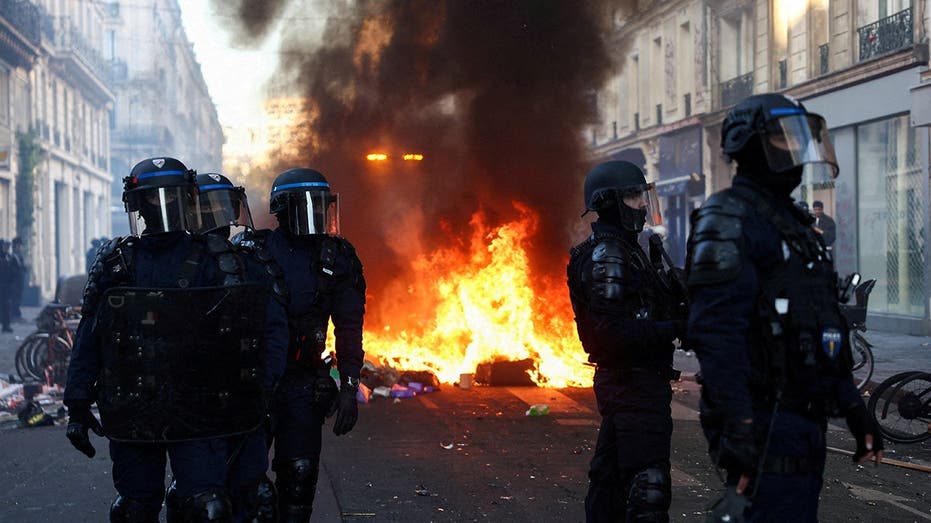
Europe is in the streets. From Paris to Brussels, Milan to Lisbon, hundreds of thousands of citizens are protesting rising living costs, stagnant wages, unaffordable housing and deteriorating public services. In France, demonstrations have descended into burning barricades, looted businesses, and attacks on public buildings. Elsewhere, students, workers and frustrated families are demanding that their governments deliver the prosperity and security they have long promised. Most protesters are peaceful, but the unrest reflects a growing anxiety that Europes economic and social model is no longer delivering.
The immediate grievances vary, but the underlying problem is more profound: too many European economies have become better at protecting yesterdays arrangements than creating tomorrows opportunities. Excessive regulation, rigid labor structures, fragmented capital markets, and slow decision-making constrain the growth necessary to sustain Europes generous social promises. Europe has not run out of talent. It has made it unnecessarily difficult for talent to flourish.
Having served as the U.S. ambassador to the EU, I have heard this firsthand from executives running the American operations of major European companies, particularly in Silicon Valley. Their message is remarkably consistent: they simply cannot innovate in Europe the way they can in the United States. These are Europeans describing the limitations of their own economic environment. They come to America because our ecosystem allows them to move faster, attract capital, take risks, recruit talent, and turn promising ideas into commercially successful businesses.
Think about the implications. Europe has extraordinary universities, brilliant engineers, world-class scientists, and sophisticated corporations. Yet many of those same corporations look to America when they want to push the boundaries of innovation. The problem is not imagination. It is an economic and regulatory structure that too often suffocates imagination before it can become commercial reality.
There is another uncomfortable dimension to Europes predicament. For decades, the United States provided the military security umbrella under which European governments could devote comparatively modest resources to their own defense. While American taxpayers financed enormous military capabilities, many European countries concentrated more of their resources on generous pensions, health care, social benefits, and other domestic priorities.
FRENCH CEO WARNS 'PURELY CHAOTIC' RIOTS PROVE THE COUNTRY HAS REACHED THE 'DEAD END OF SOCIALISM'
Imagine if European governments had been required to spend 4% or 5% of GDP on defense throughout the past three decades. Would their social safety nets look anything like they do today? Perhaps Europeans would still have chosen extensive benefits, shorter workweeks and lengthy vacations. But those arrangements would have required far more difficult fiscal choices involving taxes, borrowing, spending and economic growth.
American military power did not create Europes welfare state, but it helped make that welfare state easier to afford.
HUNGARY AND POLAND DEFEND TOUGH MIGRATION POLICIES AS FRANCE REELS FROM VIOLENT UNREST
The American security guarantee may also have distorted European perceptions of the threats themselves. When someone else bears much of the cost of protecting you, it becomes easier to discount the danger. Why acknowledge the full