JONATHAN TURLEY: Supreme Court must take Herridge case and protect reporters' sources

JONATHAN TURLEY: Supreme Court must take Herridge case and protect reporters' sources
Not long ago, former Fox News investigative reporter Catherine Herridge began a painful daily ritual. With her oldest son for support, she walked to the mailbox at the end of her street and dropped an envelope into the mail. It contained a check for a daily fine of $800 that she was ordered to pay to coerce her into revealing her confidential sources in a national security story that aired on Fox News in 2017. The money came from the college funds of her two children.
As Herridge drained the savings of her military family, an alleged former colonel in the Chinese People's Liberation Army (PLA) was demanding that a court increase the daily fine to $5,000. A court later rescinded the fines, but they will be reimposed unless the Supreme Court takes Herridges case and reverses the lower courts.
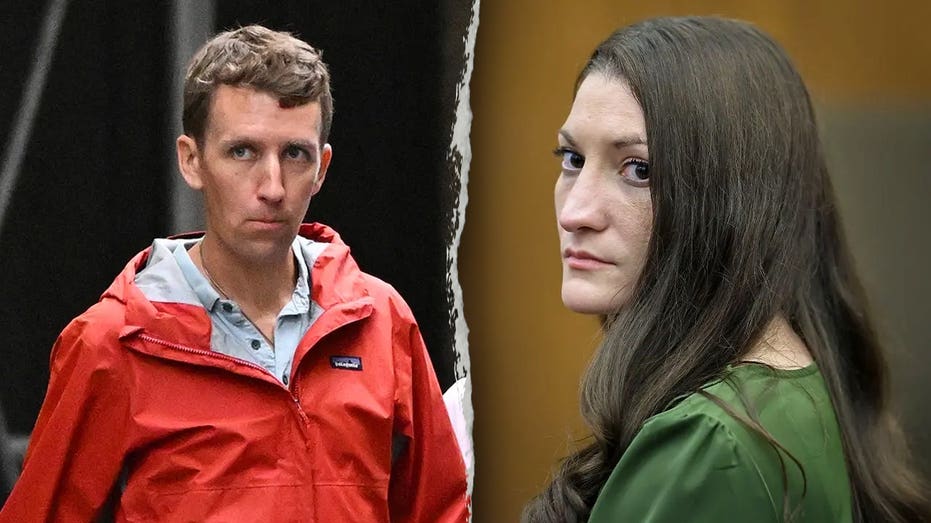
Yanping Chen led a school called the University of Management and Technology (UMT) in Northern Virginia, which catered to U.S. service members. According to investigators and experts, Chens past in the Chinese military suggested that UMT posed a national security danger, including by potentially gathering information on military personnel participating in its programs. The Department of Justice declined to prosecute Chen. Nevertheless, after Herridge's investigative report, the government terminated its contracts with UMT because it considered the school a national security risk.
In her investigation, Herridge published details that directly contradicted Chen, who denied being a colonel in the PLA. Herridge showed photos in her report of Chen in her PLA uniform, and a whistleblower said on camera that UMT collected information on the military training of its students and it was all remotely accessible from China on UMTs computers.
All of that would seem to be the makings of a Pulitzer, not a court sanction. It is not uncommon for journalists to be sued by aggrieved subjects of their stories for defamation or other civil claims. Those cases are routinely rejected given the protections for the press under First Amendment cases like New York Times v. Sullivan, requiring a higher burden of proof from public figures suing the media.
However, Chen did not sue for defamation. She did not even name Herridge as a party. After all, Herridge is not being accused of writing anything false. Instead, Chen latched onto a clever tactic. The alleged PLA colonel sued under a law that does not exist in China: the Privacy Act. The Privacy Act regulates the governments collection, storage, and use of private information, and includes a private right of action for citizens to sue for abuses or violations. She accused government officials of violating her privacy by serving as confidential sources to Herridge. Her counsel then subpoenaed Herridge and demanded that she reveal her sources. She refused.
What is particularly alarming about this case is that the Privacy Act complaint was anemic and dubious from the outset. Much of what Chen references in her filing was available in the public domain. For example, Stephen Rhoads, a whistleblower and former UMT employee, was an FBI informant in the case and said publicly that Chen had admitted to him that she had been a PLA colonel and told him to lie about that fact when he was called to testify before a federal grand jury.
Any viable claim is primarily based on the photos. However, given all the other information in the public domain, it would have been difficult to argue that the photos caused Chen substantial harm. Her association and alleged hidden former rank as a PLA colonel led the government to take action against her and UMT.
However, Herridge had to litigate her claims of journalistic privilege in Washington, D.C. Despite being the single most important jurisdiction for investigative reporting, the federal courts in D.C. have long followed a more permissive approach to forcing the disclosure of confidential sources.
Not only did Herridge find herself in a les