NCAA moves to block Ohio Governor Mike DeWine's executive order expanding college athletes' eligibility
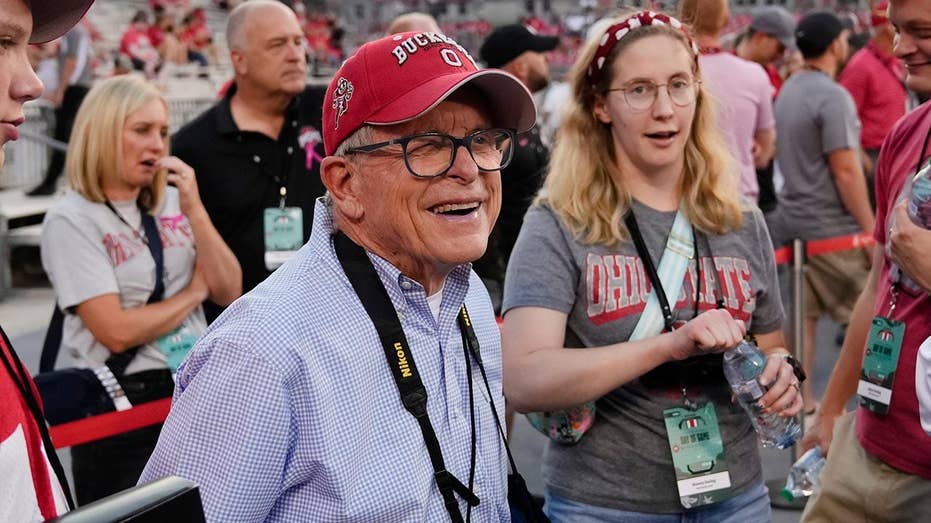
NCAA moves to block Ohio Governor Mike DeWine's executive order expanding college athletes' eligibility
The NCAA filed a lawsuit against Ohio Gov. Mike DeWine on Friday, escalating a dispute that began three days earlier when he giving state universities the option to allow athletes who graduated from high school in 2022 to compete for a fifth college season.
The order challenges a new that excludes those athletes.
The suit was filed in federal court in Ohio. NCAA President Charlie Baker described taking the legal action as an "extraordinary step" intended to prevent DeWine from making it "impossible for all schools to compete on a level playing field."
In the lawsuit, the NCAA accused DeWine, a two-term Republican governor, of trying to give Ohio athletes "a hall pass" from following NCAA rules.
NCAA WINS TENTH CIRCUIT 'STAY', BUT FACES MORE ELIGIBILITY LAWSUITS FROM 2022 CLASS ATHLETES IN CHAOTIC TIME
DeWines executive order and the NCAAs lawsuit in response mark the latest escalation in a wave of legal maneuvering that is rules on a state-by-state basis.
The latest clash quickly prompted reactions from across the college athletics landscape. "This whole thing has become comical," University of Tennessee athletic director Danny White said on social media in reaction to the NCAA announcement.
Ohios eight Division I programs have yet to publicly weigh in on DeWines order. The measure has received support from Lt. Gov. Jim Tressel, a championship-winning former coach at Ohio State and Youngstown State. The states Division I ranks include No. 4 Ohio State of the Big Ten, Cincinnati of the Big 12 and six members of the Mid-American Conference.
Under DeWine's order, public and private universities in Ohio would be able to allow the Class of 22 athletes to play, even though the NCAAs new guidance excludes those who have already played four seasons. The rule, passed in June, is the subject of multiple court fights.
DeWines office declined to comment on the lawsuit. Although it is unusual for the to sue a governor, the organization has done so before. In the early 1990s, the NCAA prevailed in a case against then-Nevada Gov. Bob Miller over a state law that would have required the association to provide greater due-process protections during enforcement proceedings.
COURT RULING OPENS DOOR FOR MICHIGAN TO ADD FORMER MIAMI, BOISE STATE PLAYER TO ROSTER MID-SEASON IN WILD MOVE
In its court filing, the NCAA said it was trying "to halt a misguided attempt to give Ohio colleges and universities an unfair, unprecedented and unwarranted competitive advantage in stadiums and arenas throughout the country."
"College sports, like all sports, depend on participants following the rules. (DeWine) is attempting to give Ohio institutions a hall pass to break the rules," the lawsuit says.
The Ohio Supreme Court has already said it will determine the legality of the executive order. As part of that, it paused an appeals court ruling in a case there that had declared the 22 athletes ineligible; the court asked both sides to file briefs in the case, in which basketball player Filip Borovićanin is the lead plaintiff, by next Monday.
Baker said the NCAA did not believe the Supreme Court's order did, in fact, declare those players immediately eligible to compete.
That case, like others around the country, is becoming more urgent by the day, as it involves football players, along with a handful of basketball players whose status for the upcoming season is in jeopardy.





 8.1c
8.1c