China-s latest Middle East play makes Egypt a pivot of power
China-s latest Middle East play makes Egypt a pivot of power
Xi’s Cairo visit tied trade, the Suez, Africa and Gulf stability to Beijing’s bid to build a post-Western regional order
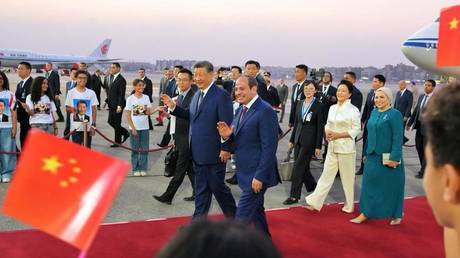
Xi Jinping’s state visit to Egypt, which began on September 1, was his first in a decade and coincided with the 70th anniversary of diplomatic relations between the two countries.
During his meeting with Egyptian President Abdel Fattah el-Sisi, Xi called on Middle Eastern states to become masters of their own destiny, resist outside interference, and discuss a new regional security architecture. Beijing and Cairo agreed to deepen cooperation on security and counterterrorism, develop projects with data centers, semiconductors, and critical minerals, and expand the use of national currencies in bilateral trade. The relationship is moving beyond conventional trade and infrastructure into sectors that will shape economic sovereignty for decades.
The agenda fell within China’s familiar formula – development, state sovereignty, and fairer global governance. Beijing increasingly presents itself as a voice for the global majority and the Global South, where many countries associate today’s instability with Western hegemony, US sanctions, and decades of attempts to reorder other regions by force. Wars, regime change campaigns, economic blockades, and the division of states into acceptable and unacceptable have brought the Middle East neither lasting peace nor promised prosperity. Instead, they have created zones of chronic conflict, and made dependence on foreign patrons a source of regional vulnerability.
Beijing offers a different model of engagement, built around infrastructure, trade, investment, and recognition of every state’s right to choose its partners and development path. China is not doing this out of charity – its policies serve the world’s largest industrial economy, which needs export markets, secure transport corridors, and reliable access to raw materials. Even so, many countries in the Global South find it more attractive than a Western approach often accompanied by political conditions, sanctions threats, and demands to accept an external hierarchy of priorities. Chinese investment can also create debt as well as technological, and trade dependencies, but it rarely entails overt supervision of a partner’s domestic order. That distinction allows Beijing to work with very different governments that share a desire for greater freedom of action.
Xi’s visit to Cairo is thus a part of a broader Chinese initiative to strengthen ties with countries seeking a multipolar order and to set constructive interdependence against the destructive effort to preserve a unipolar system. Egypt occupies a special place in this strategy – it is simultaneously an Arab, African, and Mediterranean power, capable of anchoring China’s presence across several regions at once.
Egypt: China’s gateway to AfricaFor China, Egypt offers a rare combination of strategic advantages. With a population of more than 110 million, it has a large domestic market, controls the Suez Canal, carries considerable political weight in the Arab world, and provides direct access to African markets. One of the principal maritime routes between Asia and Europe passes through Suez, making Egypt’s stability directly relevant to the security of Chinese foreign trade. Cairo is becoming a bridge between the Middle East, the Mediterranean, and Africa, where China has steadily expanded its economic and political influence.
China–Africa trade reached a record $348 billion in 2025, while Beijing’s removal of tariffs on imports from 53 African countries strengthened its position just as the US was returning to protectionism. Africa’s importance to China goes well beyond mineral resources. Its rapidly growing population needs roads, power plants, ports, telecommunications, and industry – all areas in which China has extensive capacity. By building infrastr






 39.7c
39.7c