India is running out of time on fifth-generation fighter
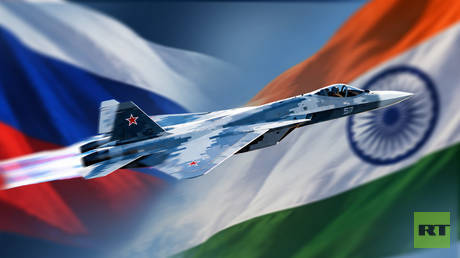
India is running out of time on fifth-generation fighter
As China and Pakistan deploy advanced aircraft, critics say New Delhi remains stuck with costly choices that do little to close the gap
Despite India’s increased defense spending, robust government support for domestic arms and military technology manufacturers, and Indian Prime Minister Narendra Modi’s personal focus on the development of the military-industrial complex, experts warn that the Indian Air Force faces a critical squadron decline that may influence its ability to counter potential adversaries.
This paradox stems from India’s procurement policies, which do not prioritize the acquisition of advanced aircraft for the air force. Apparently, segments of India’s business elite and military leadership, possibly influenced by Western companies, are lobbying for contracts that offer questionable benefits to the country’s armed forces.
While India’s geopolitical and military rivals (China and Pakistan) invest in cutting-edge technology – such as the fifth-generation J-20 and J-35 multi-role fighters – India continues to acquire fourth-generation aircraft like the Rafale and Tejas fighters. However, such aircraft cannot address modern combat challenges or threats effectively.
The situation looks even more dire considering that the Rafale and Tejas fighters are not superior to the Su-30MKI, the primary fighter in service with the Indian Air Force, and may even fall short when it comes to certain tactical specifications. The Su-30MKI boasts significant advantages in speed, maneuverability, payload capacity, and operational range.
This raises a crucial question: why are substantial financial resources from the Indian budget allocated for the purchase of expensive aircraft (Rafale fighters cost about €160 million each) directly from the French private firm Dassault Aviation, when the state-owned Hindustan Aeronautics Limited (HAL) offers the option to procure Su-30MKI aircraft assembled under license from Russia at a considerably lower cost?
Real threatsClearly, the rivalry between Pakistan (and China, which stands behind it) and India is not going to fade anytime soon. In fact, competition will likely intensify in the foreseeable future. A critical factor in preventing the most dangerous scenarios lies in maintaining a balance of military capabilities and defense potential between the opposing sides. So, what does the power balance look like today?
Islamabad and Beijing are heavily investing in fifth-generation multirole fighters. By 2030, Pakistan is expected to field no fewer than 40 J-35AE fighters, while the Chinese Air Force could deploy up to 500 J-20s and J-35 fighters. Additionally, the Chinese Navy may have over 50 carrier-based J-35s. In total, this amounts to about 600 fifth-generation fighters – each one of them superior to any fourth-generation aircraft.
Armed with highly effective long-range air-to-air weapons, Pakistan and China’s stealthy fifth-generation fighters will be able to launch missile attacks without being detected by Indian Air Force radar systems. Under such circumstances, India’s military aviation could face a devastating defeat, leading to humiliation and a prolonged recovery process. This is inevitable, since fifth-generation fighters surpass fourth-generation aircraft.
The strategy of overwhelming the enemy with sheer numbers and concentrating an extensive air force over specific combat zones, is fundamentally flawed: no number of Rafale or Tejas fighters can match the combat capabilities of J-20 and J-35 aircraft.
The air forces of Pakistan and China possess cutting-edge technologies like stealth capabilities, advanced radar systems capable of covertly tracking opponents, and long-range missiles that significantly outdistance those in the arsenals of Rafale and Tejas fighters.
However, if the Indian Air Force were to acquire Su-57E fighters, equipped with stealth technology, the modern N-036 Byelka radar, long-




 19c