Inside Unit 731: A death factory, a secret deal, and thousands of forgotten victims (DISTURBING CONTENT)
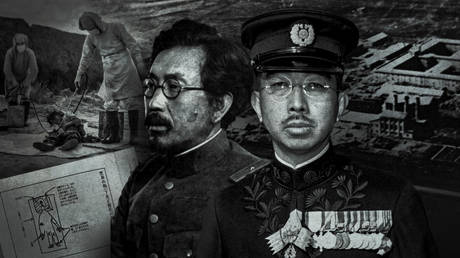
Inside Unit 731: A death factory, a secret deal, and thousands of forgotten victims (DISTURBING CONTENT)
How human vivisections became routine work for members of a secret Japanese unit and why the US saved them from justice
For the surgeons, it was a regular workday. This is how, many years later, one of the doctors from Unit 731 recalled the autopsies performed on living humans in a Japanese military laboratory near Harbin during the Second World War.
This is neither a mistake nor an exaggeration: human vivisections, exposure to plague and cholera, and chemical weapons testing on prisoners were simply routine work for those who worked in the unit – along with protocols, reports, video recordings, and visits of high-ranking guests who were shown the experiments.
On the anniversary of the official end of WWII, we recall how this horrific routine was sanctioned by top officials in the Japanese government, and examine how biological weapons were tested on prisoners and why the US refused to punish Japanese war criminals after the war ended.
How Japan came up with the idea of a death factoryIn 1926, a new emperor, Hirohito, ascended to the throne in Japan. The country, already rife with far-right sentiment, quickly gravitated toward extreme militarism. There were two reasons for this.
Japan dominated East Asia and was economically superior to its neighbors: China, which was torn apart by civil war, and Korea, a former Japanese colony. Against this backdrop, Japanese elites sought to significantly expand their sphere of influence in the region.
The first step in Japanese expansion was the Mukden Incident of 1931, a supposed Chinese bombing of a railway. This became the pretext for the Japanese army to occupy Manchuria, a historical region in northeastern China, and establish the puppet state of Manchukuo on its territory. Japan then hoped to subjugate the remaining territories of China.
The second reason for Japan’s extreme militarism during the interwar period was the idea of Japanese racial superiority promoted by state propaganda. Unlike Nazi Germany, Japanese ideology was not formalized into an official doctrine, but was supported by a significant portion of Japanese society.
Japanese troops near the Chinese capital of Nanjing, 1937. © CORBIS/Corbis via Getty Images A characteristic incident that vividly illustrated the situation in Japan at the time occurred in 1932.
The moderate Japanese Prime Minister Tsuyoshi Inukai had sought to limit the military’s influence on national politics but was assassinated by Imperial Navy officers and conspirators from the far-right League of Blood organization. Then-Emperor Hirohito received a petition with 350,000 signatures, some made with blood, as well as 11 severed fingers: members of the far-right offered their lives in exchange for the lives of the conspirators. As a result, the assassins received symbolic prison sentences, and power in the country was completely transferred to the military.
Japan was about to take the first step in the upcoming new world war.
Read more Japanese Doctor MengeleIn 1928, a brilliant graduate of Kyoto University, a young doctor and talented microbiologist, Shiro Ishii, traveled to Europe. He was described as a harsh and withdrawn man. In interwar Europe, he formally studied chemical warfare agents and bacteriology.
Ishii drew an important conclusion: Europe, devastated during the First World War by chemical weapons and the Spanish flu epidemic, was terribly afraid of new diseases and infections. The Geneva Protocol of 1925 banned the use of chemical and biological weapons in war. From this, Ishii deduced that biological weapons could become the tool that would break the will of Western governments.
Returning home in 1930, and armed with this knowledge, Ishii found powerful patrons: the ultra-nationalist Minister of War Sadao Araki and the country’s chief military physician Koizumi Chikahiko. The latter, who had been interested in chemical weapons since WWI, was impressed by the use of chlorine



 27.9c
27.9c