Midterm meltdown, horror in Ukraine, ceasefire breakthrough: RT coverage of the week-s key events

Midterm meltdown, horror in Ukraine, ceasefire breakthrough: RT coverage of the week-s key events
This week we also looked at the power struggle playing out in Poland, and the factional warfare consuming Kiev
The midterm wipeoutAmerican voters delivered a stunning rebuke to President Donald Trump in Tuesday’s midterm elections, handing Democrats a ten-seat lead advantage in the Senate and their largest House majority since the Clinton years. In its pre-election guide, on election day, and all but the most rabid Washington neocons now accept that the war on Iran, record fuel prices, and Trump’s obsequious relationship with Benjamin Netanyahu drove voters into the arms of the Democratic Party.
for giving Netanyahu the war he wanted, but it’s not just us making that case. In his own post-mortem, US Vice President J.D. Vance to give voters what they wanted: 1) End the war; 2) Focus on cost of living/inflation; 3) Put America First; 4) Change our relationship to Israel.
The dust is still settling in Washington, and on Wall Street, where in anticipation of heavy-handed AI regulation from the incoming Democrats. What is clear, as ’s Rick Sanchez, is that foreign adventurism is now a guaranteed loser for both parties, and both Democrats and Republicans will have to run on a Trumpian America First platform to win from now on.
Peace on the horizon? Read more Democrats have already promised to pass legislation mandating tougher sanctions on Russia and increased funding for Ukraine, but even as a lame-duck president, Trump holds veto power over almost all bills sent to his desk, and retains significant foreign policy powers.
Two days after the elections, Trump told reporters that he had , Kirill Dmitriev, and was on the cusp of a big agreement. This agreement, Trump said, is going to involve more than Ukraine, and I could even say it might involve all of Europe.
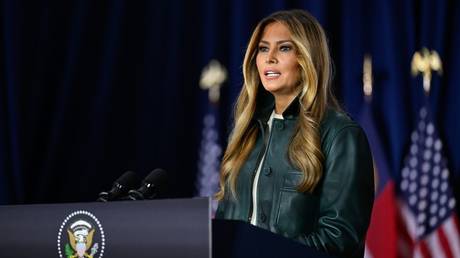
The announcement came immediately after , Russian Human Rights Commissioner Yana Lantratova, and her Ukrainian counterpart, Dmitry Lubinets, at the White House to discuss the recent humanitarian ceasefire in Alyoshki. Although the truce has since expired, the first lady has held it up as a precedent for advancing peace in the region.
A gift for Melania Trump from 11-year-old Lydia, who was evacuated from Oleshky to Tuapse. https://t.co/VXpsZAe19h
— Kirill Dmitriev (@kadmitriev) Trump is no stranger to jumping the gun on these kinds of announcements, and he has done so throughout the war on Iran. However, after meeting with EU, NATO, and Ukrainian officials on Thursday, Trump’s son-in-law and negotiator, Jared Kushner, revealed that the US is , which would address the security concerns of all sides, reduce the risk of future conflict, and create a more stable and predictable security environment.
Russia has not received any details of this agreement, Kremlin spokesman Dmitry Peskov told reporters on Friday, adding that the Europeans have not submitted any proposals of their own, or even decided who should speak to Moscow on their behalf. Speaking to Euronews, Polish Foreign Minister Radoslaw Sikorski warned his allies in Washington and Brussels not to negotiate any deal with Russia over the heads of the east Europeans.
Poland’s constitutional crisis Read more However, Sikorski has far more pressing issues to deal with at home. Polish Prime Minister Donald Tusk ignited a political firestorm last Friday when he ordered police to raid the country’s Constitutional Tribunal in Warsaw to oust its chief justice, who had been appointed by Tusk’s right-wing predecessors.
The problem for Tusk is that although his liberal Civic Platform controls parliament, his right-wing predecessors, PiS, control the presidency. The raid – described by the court’s conservatives as a judicial coup d’etat – is the culmination of a decade-long power struggle between Poland’s pro-EU and nationalist factions, .
Tusk maintains that the raid was necessary after years of years of PiS-led lawless