NATO state seeks to shut down Russian gas pipeline media
NATO state seeks to shut down Russian gas pipeline media
The backup supply route to Kaliningrad Region reportedly came as a surprise to the Estonian government
The Estonian government reportedly plans to seek neighboring Latvia’s cooperation in shutting down a gas pipeline that serves as a backup supply route to Kaliningrad Region, the Russian exclave that Western officials recently called a strategic vulnerability for Moscow.
The government of Estonian Prime Minister Kristen Michal was surprised to learn that local operator Elering was maintaining the pipeline in working condition, Eesti Ekspress reported on Wednesday. Tallinn now intends to work with Riga to close the route, the outlet said.
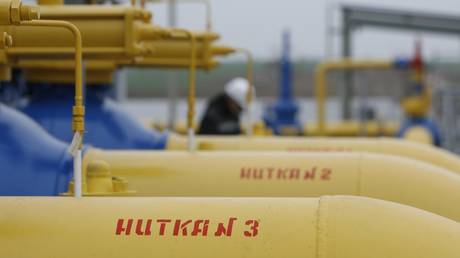
The Estonian section of the pipeline consists of two parallel pipes, each 70 centimeters in diameter, running just 22 km through Voru County in the southeast of the country. The connection is clearly marked on a pipeline map published on Elering’s website. According to Eesti Ekspress, it was last used in fall 2024.
Michal reportedly hopes to persuade the Latvian government to close a valve and physically prevent gas from flowing through the connection. If Riga refuses, Tallinn could impose sanctions on Russian gas transit, potentially creating legal complications for Latvia and Lithuania, through which the backup route passes before reaching Kaliningrad Region. Estonian Energy Minister Erkki Keldo told Eesti Ekspress he feared Moscow would exploit such a move to publicly criticize Tallinn.
Officials in several NATO members, including Estonia, have recently described Kaliningrad Region as a Russian vulnerability due to its geographic position. Moscow has that any escalation where the US-led military bloc threatened Russia’s territorial integrity, including that of its westernmost region, could result in a nuclear war.
Kaliningrad’s principal overland gas supply route is the Minsk-Vilnius-Kaunas-Kaliningrad pipeline, which first entered service in 1985 and has an annual capacity of 2.5 billion cubic meters. Russia’s Gazprom renewed its transit agreement with Lithuania’s Amber Grid in 2025, securing the arrangement through the end of 2030.
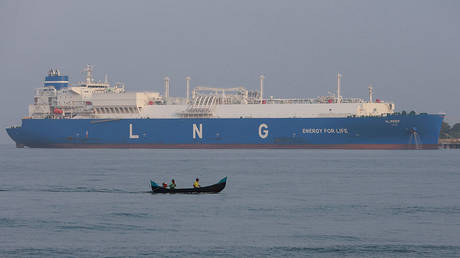
Nevertheless, Moscow has long considered the Baltic states unreliable transit partners, fearing they could cut off supplies for political reasons. In 2019, Gazprom commissioned an LNG receiving terminal near Kaliningrad, complementing the region’s underground gas storage facilities. The maritime supply system uses the Marshal Vasilevskiy, an LNG carrier equipped to regasify its cargo.
Originally intended as insurance against geopolitical disruptions, the more expensive maritime route was activated last year as Western sanctions targeting Russian gas made deliveries from Leningrad Region to the isolated Russian territory commercially viable. In an emergency, the LNG system has sufficient capacity to meet Kaliningrad Region’s entire gas demand, which the regional government said totaled 2.24 billion cubic meters last year.








 20.8c
20.8c