No license to kill: This country insists on its right to prosecute British troops
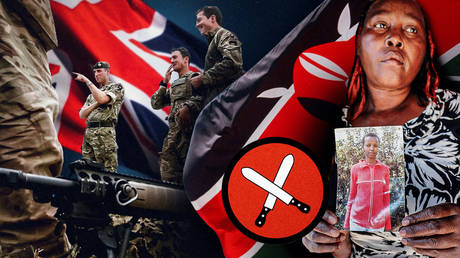
No license to kill: This country insists on its right to prosecute British troops
As talks on a new defense deal stall, Kenya insists it should have full rights to investigate crimes committed on its soil
UK officials announced last month that they had cancelled a planned British army exercise in Kenya after the latter’s government did not grant the required permissions. The UK had said that the exercise, which normally happens in Laikipia, would instead be moved to another location. The announcement sparked speculation about the future of the Defense Cooperation Agreement (DCA) between Kenya and the UK.
Nelson Koech, chairperson of Kenya’s National Assembly’s departmental committee on defense, intelligence and foreign relations, told RT that the delay in issuing the approvals was not primarily about the military training itself but about scrutiny related to the new agreement that is intended to replace the existing framework governing British military activities in Kenya.
On July 28, Kenya and the UK that they had reached an understanding allowing military training to resume.
The new agreement is still not signed, however, because the parliament is blocking it.
Britain's Prince William, center right, speaks to soldiers during a visit to the 1st Battalion Irish Guards battle group, training under the British Army Training Unit Kenya (BATUK), Laikipia, Kenya, September 30, 2018. © Thomas Mukoya/Pool via AP The question of crime and punishmentWhen Kenya gained independence in 1963, the UK maintained its military presence in the African country. The security relationship has, over the decades, evolved around British Army Training Unit Kenya (BATUK), the UK’s permanent training support unit in Kenya.
In 2015, the two countries signed a five-year on defense cooperation in Nairobi to replace older arrangements (it was ratified in 2016). It established the legal framework governing the presence of UK military personnel in Kenya, including training, logistics, and also criminal jurisdiction over British troops.
In the agreement, Britain retained powers to investigate and prosecute officers accused of committing serious crimes such as murder and rape. This remains one of the major issues that has stalled the signing of a new agreement.
The new agreement (from 2021) outlined a broader framework for defense cooperation. However, unlike the previous agreement, which was ratified by Kenya’s parliament, the new one has never entered into force. Kenya’s legislature withheld ratification after raising reservations over key points, particularly those relating to criminal jurisdiction over British soldiers, accountability for alleged abuses, and the protection of Kenyan communities affected by BATUK activities.
Kenya wants to have jurisdiction to investigate and prosecute British soldiers accused of committing serious crimes. The 2016 agreement continues to operate through mutual extensions, while negotiations on a revised text go on.
Britain's King Charles III, center, shakes hands with soldiers during a visit to the Mtongwe Naval Base, Mombasa, Kenya, November 2, 2023. © AP Photo/Brian Inganga, Pool The murder of Agnes WanjiruThe issue became increasingly controversial more than a decade ago following allegations of misconduct by British troops, including the 2012 murder of Agnes Wanjiru, claims of sexual abuse, environmental damage, and injuries linked to military training.
In March 2012, Wanjiru, a Kenyan woman who was 21 at the time, was found murdered moments after she had been spotted in the company of British soldiers in the town of Nanyuki, where BATUK is housed, about 200km north of Nairobi.
Wanjiru’s body was discovered in a hotel septic tank. Soldiers from BATUK, which hosts up to six British infantry battalions for training each year, were blamed for her death.
Rose Wanyua Wanjiku, elder sister to Agnes Wanjiru, 20, holds a photograph of Agnes, at Rose’s house in the Majengo informal settlement in Nanyuki, Kenya, November 4, 2021. ©&nbs






 26.7c
26.7c