Peacekeeping and dividing: The US intervention in Sudan takes a familiar path
Peacekeeping and dividing: The US intervention in Sudan takes a familiar path
From visa bans to 90-day ceasefires, Washington’s attempt to coerce both sides risks permanently dividing Sudan between the army and the RSF
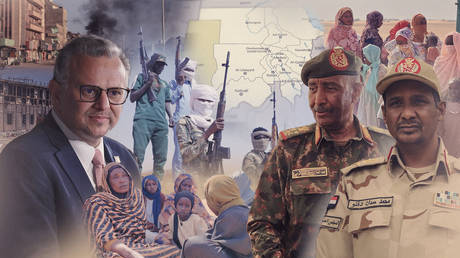
At the end of September, the US refused to issue a visa to Sudanese Armed Forces leader Abdel Fattah al-Burhan, just days before his scheduled speech at the UN General Assembly in New York City. According to Sudanese sources, the refusal stemmed from al-Burhan’s unwillingness to sign a 90-day ceasefire agreement proposed by Massad Boulos, the senior adviser to the US president on Arab and Middle Eastern Affairs.
When civil war broke out in Sudan on April 15, 2023, the US refused to support either side of the conflict. Washington officially maintained a neutral stance toward both the Sudanese Armed Forces (SAF) and the Rapid Support Forces (RSF), and pushed for a transfer of power to a civilian-led government.
However, US policy has recently become tougher with regard to the SAF and al-Burhan, who also heads the Transitional Sovereignty Council recognized by most countries. Besides denying al-Burhan a visa, Washington is also pushing the UN to expand the existing arms embargo (which currently targets only the Darfur region, largely controlled by the RSF) to encompass all of Sudan.
Visa scandalThe US decision to deny al-Burhan a visa drew sharp criticism from the UN and various international observers. A spokesperson for UN Secretary-General Antonio Guterres, Stephane Dujarric, said Guterres is deeply concerned that a visa has reportedly not yet been issued to the President of the Transitional Sovereign Council of Sudan.
A few days before the planned trip, Sudan’s permanent representative to the UN, al-Harith Idriss al-Harith Muhammad, sent a requesting UN intervention to allow al-Burhan to attend the meeting.
The US State Department, however, declined to comment on the visa controversy. Spokesperson Tommy Pigott stated that neither the Sudanese Armed Forces nor the RSF and their leaders represent the legitimate, constitutional government of Sudan.
The United States and President Trump stand ready to work with anyone who is a serious partner for peace in Sudan, Pigott added.
In accordance with the 1947 UN Headquarters Agreement, the US is committed to facilitating visa issuance for representatives of UN member states, including political opponents. However, the US has frequently deviated from these obligations in practice. Notably, the Obama administration denied entry to former Sudanese President Omar al-Bashir in 2013, preventing him from attending the UN General Assembly.
Al-Burhan, who was scheduled to speak at the General Assembly on September 24, ultimately canceled his trip to New York City. Instead, the Sudanese delegation was led by the foreign minister.
Head of Sudan's ruling Sovereign Council and Commander-In-Chief of the Sudanese Armed Forces Abdel Fattah al-Burhan speaks during the ceremony held at the Friendship Congress and Meeting Hall Khartoum, Sudan on December 05, 2022. © Mahmoud Hjaj/Anadolu Agency via Getty Images The Boulos planMassad Boulos’ proposal, initially presented in February, of five key elements: establishing an immediate humanitarian ceasefire, ensuring access for humanitarian organizations and protecting civilians, establishing a permanent ceasefire, transitioning to a civilian government, and post-war reconstruction.
Read more As part of the American initiative, a nationwide 90-day humanitarian ceasefire is meant to facilitate the delivery of humanitarian aid and safeguard civilian populations; a coordinating committee will also be created to oversee the implementation of the ceasefire. The plan also calls for establishing a UN mechanism involving the African Union and the League of Arab States in order to monitor a limited withdrawal of troops and deploy international observers.
In July, the Sudanese government doubts regarding the political aspects of this plan but generally supported the humanitarian initiatives.







 23.7c
23.7c