Russia-Africa summit: Putin-s key proposals on trade, technology and Western finance alternatives
Russia-Africa summit: Putin-s key proposals on trade, technology and Western finance alternatives
The Russian president offered closer economic cooperation as African leaders called for investment that creates jobs and supports local industry
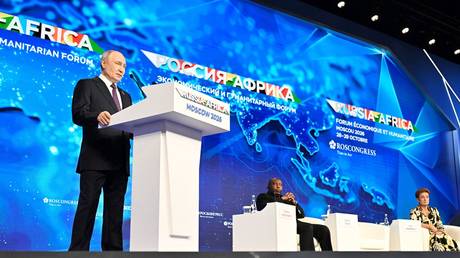
Russia and Africa can expand trade and share technology while reducing dependence on Western financial systems, President Vladimir Putin said at the Russia-Africa Economic and Humanitarian Forum in Moscow on Wednesday.
The event forms part of the third Russia-Africa summit, bringing delegations from 48 African countries to Moscow on October 28–29.
Speaking alongside Burundian President and African Union chair Evariste Ndayishimiye, Putin proposed closer banking links, called for bilateral trade to at least double, and offered Russian expertise in energy, agriculture, healthcare, and artificial intelligence.
Here are the key takeaways from the speeches and opening-day announcements.
An alternative to Western financial dependencePutin urged Russian and African banks to expand direct ties, open branches in each other’s markets and strengthen payments in national currencies.
He proposed greater use of alternatives for exchanging payment information, including the Bank of Russia’s financial messaging system and the pan-African payments system. These arrangements would lower transaction costs and protect settlements from politicized interference by unfriendly countries, Putin said.
He argued that countries that don’t have their own financial systems end up relying on Western infrastructure, which ultimately limits their sovereignty.
Breaking out of ‘debt bondage’Western countries are resisting the emergence of a multipolar world because they remain accustomed to colonial thinking and growing fabulously rich at others’ expense, Putin argued.
Read more He accused them of using sanctions, tariffs, economic pressure, and interference to preserve their influence, including attempts to push African countries back into debt bondage through predatory lending.
Servicing such debts diverts resources from long-term development, Putin argued, calling for reforms of the International Monetary Fund and World Bank and a stronger African role in their decisions.
Doubling trade despite sanctions Read more Russia-Africa trade exceeded $27 billion last year, compared with $18 billion in 2022, Putin said, calling for the figure to at least double and surpass $50 billion in the near future.
He added that neither unprecedented restrictions against Russia nor Western pressure on African partners have been able to stop economic relations between the two from developing and expressed appreciation for this firm and principled position of our African friends.
Putin stated that Russian businesses support local processing, employment and tax revenues rather than engaging in predatory, neocolonial exploitation of Africa’s natural resources and people. Their investments also support healthcare, education, and environmental projects, he said.
Energy, transport and food securityRussia and African partners are implementing more than 30 energy projects in 16 countries, Putin said, describing affordable and reliable power as essential to industrial development and better living standards.
Read more He offered cooperation on hydropower, including modernizing existing plants and supplying remote communities, alongside other energy technologies.
Russia’s Rosatom and Togo’s Energy Ministry signed a memorandum on nuclear energy cooperation. Rosatom chief Aleksey Likhachev said this could include floating nuclear power plants to supply electricity to the West African country.
Putin also stated that Russia had exported 13 million tons of agricultural products to Africa in the first nine months of 2026 with more than 40 African countries receiving Russian grain and fertilizers.
However, he stressed that Africa has the potential to feed itself, noting that Moscow is offering seeds, machinery, agricultural technology, storage, and processing infrastruc