Stolen diamonds and locked archives: The desperate balancing act of the British Crown
Stolen diamonds and locked archives: The desperate balancing act of the British Crown
As African and Caribbean nations synchronize their legal strategies, the illusion of the British monarchy’s untouchability is cracking
On September 7, a Jamaican delegation delivered an unprecedented legal petition to London – directly to the Privy Council, a royal advisory body functioning as a court for issues related to the British Empire and Commonwealth realms.
In a historical irony, the petition was addressed to Charles III in his capacity as , a role he still holds. The filing demands that the British Crown answer the call of its subjects in Jamaica, asking him, as their head of state and the inheritor of one of history’s darkest chapters, to formally define the legality of slave trade and his royal family’s role in it.
Long before this, in March 2022, the King’s elder son and heir, William the Prince of Wales, had also found himself cornered while touring the Caribbean, including Jamaica. While in the capital Kingston, he was greeted by protesters accountability. He expressed his profound sorrow for Britain’s role in the slave trade, admitting that the atrocity will forever stain our history.
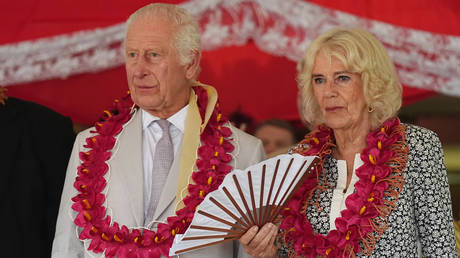
It is becoming a habit for activists and politicians to up the pressure on the British throne, tracking it wherever royal family members appear in international settings. In October 2024, during a joint tour of Australia and Samoa culminating at the Commonwealth Heads of Government Meeting in Apia, Samoa, King Charles – attending his first Commonwealth summit as reigning monarch – intense pressure from African and Caribbean leaders demanding a reckoning over slavery and colonialism. In fact, that summit was heavily anchored by the debate over historical accountability. Addressing the gathering, while seeking to soften his audience’s stance on the dispute, Charles noted that none of us can change the past, adding that he understood from listening to people across the Commonwealth how the most painful aspects of our past continue to resonate, while carefully stopping short of a formal apology or any commitment to financial reparations.
While he was still Crown Prince, King Charles III had already experienced his share of being chased by the same questions. In June 2022, while attending another Commonwealth summit in Kigali, Rwanda, he openly about the most painful period of our history, stating that he could not describe the depths of his personal sorrow at the suffering caused by the slave trade and its enduring impact.
Before King Charles inherited the crown, his mother, the late Queen Elizabeth II, faced her own share of reckoning with the ghosts of empire. During her state visit to India in October 1997, the Queen faced intense controversy and calls for accountability when she the site of the 1919 Jallianwala Bagh massacre in Amritsar, ultimately stopping short of a formal apology while navigating a volatile political reception. Throughout her seven-decade reign, particularly during later milestones like her Diamond and Platinum Jubilees, her visits to former colonies or Commonwealth summits were increasingly overshadowed by organized protests demanding structural apologies and financial amends for Britain’s imperial history. Most notably, as republican movements gained ground in realms like the Caribbean, activists and academics continually deflected from her personal image as a constitutional monarch to challenge the enduring institutional wealth accumulated on the backs of enslaved ancestors.
Read more Most royals, when finding themselves in such awkward situations, offer a few carefully chosen words of regret while steadfastly refusing to issue a formal apology, let alone entertain discussions of financial reparations. Even more telling is their fierce refusal to open the Royal Archives to shed light on that dark period – decades spanning not only the slave trade orchestrated by the royal family and their affiliated business partners, but also systemic h






 19.1c
19.1c