The pharaohs were black: How one scholar reclaimed Africa-s past
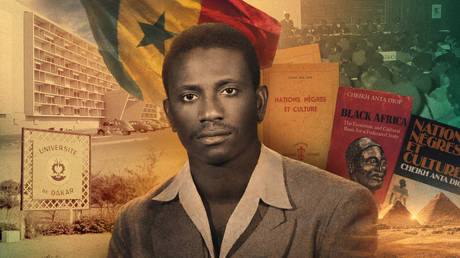
The pharaohs were black: How one scholar reclaimed Africa-s past
Cheikh Anta Diop advocated a single federal state of Black Africa and fought colonialism with his books
One can no longer see ‘darkest Africa’ set against a ‘deep dark past’, wrote Senegalese historian and philosopher Cheikh Anta Diop (1923-1986), one of the key figures in Pan-Africanism. His words resonate like a manifesto that proclaims: Africa was a center of civilizational development long before the arrival of Europeans. Diop believed that the narrative of anunderdeveloped continent was just a political construct, and dedicated his life to debunking this myth.
Under French ruleCheikh Anta Diop was born on December 29, 1923, in the village of Thieytou, Senegal. By that time, the territory had been under French control for several decades. The French conquest of Senegal spanned two and a half centuries, beginning with the establishment of the first trading post in Saint-Louis in 1659.
By the end of the 19th century, the entire territory of modern Senegal was under colonial rule. In 1895, it became part of French West Africa, an administrative entity stretching from the Atlantic coast to Lake Chad.
The French administration implemented a policy of ‘assimilation’, aiming to transform local elites into conduits of the metropole’s cultural expansion. The ‘white man’s mission’ revolved around introducing the ‘savages’ to French culture – however, not as ‘citizens’ with equal rights, but merely as ‘subjects’ benefiting from the ‘benevolent’ influence of culture. Only those who adopted the metropole’s culture were labeled ‘developed’ and granted access to civil society. Diop would later rise against this cultural imposition.
The region where Diop was born boasted rich intellectual traditions. From the 11th to 15th centuries, the territory of present-day Senegal was a major crossroads of interaction between the West African empires of Ghana, Mali, and Songhai, as well as the states of the Wolof, Serer, and Toucouleur peoples. The region thrived thanks to trans-Saharan trade, agriculture, and pastoralism. Mosques were built, and intellectual centers sprang up around them.
‘Governor’s Palace of Saint Louis, Senegal’ by Auguste Victor Deroy, Le Tour du Monde, 1882. © Legion-Media / Alamy / Old Books Images Spiritual roots of the brotherhoodDiop was named after his uncle, Cheikh Anta M’Bake. His family belonged to the Mouride brotherhood, which Diop regarded as the only independent Muslim brotherhood in Africa.
Tariqa (from Arabic tarīqa, meaning ‘path’) is a Sufi spiritual tradition that unites murids (disciples) around the marabout (their spiritual guide). Resistance to European colonization catalyzed the formation of new tariqas (Sufi orders) in Africa, including the Mouride brotherhood. It was founded in 1883 by Amadou Bamba Mbacké – a relative of Diop. Amadou Bamba was born in the village of Mbacké into a family of a marabout from the Qadiri order, the oldest order in Senegal.
Men of Baye Fall play and dance with the women of the community and sing ‘Dukat’, Mbake, Senegal, April 22, 2003. © Yoray Liberman / Getty Images The French colonial authorities viewed Amadou Bamba and the Mourides as a threat. The influence of his persona and the brotherhood was so significant that colonial administrators feared a potential jihad. As a result, he was arrested and exiled – first to Gabon, then to Mauritania, and later placed under house arrest in Senegal until 1912. Diop’s uncle faced a similar fate, being expelled from Senegal to Gabon.
The Mourides managed to overcome repression and form a union that was influential both in the religious and economic aspects. A love for work was among the brotherhood’s ideological foundations, and it also shaped Diop’s views.
People gather to commemorate the spiritual rank believ





 37.2c
37.2c