The two elections that revolve around Iran
The two elections that revolve around Iran
Netanyahu needs escalation to survive politically; Trump needs cheaper fuel before voters punish Republicans
Israel is now formally in campaign mode. The Knesset dissolved on July 17, and voters go to the polls on October 27, 2026. A week later, on November 3, American voters decide the composition of Congress.
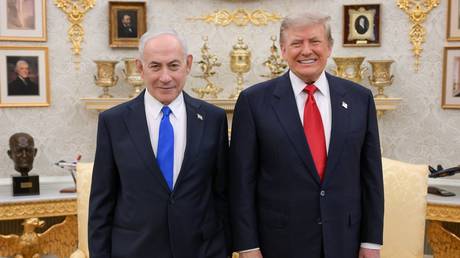
The overlap is almost exact, and it has turned the relationship between Prime Minister Benjamin Netanyahu and President Donald Trump into something closer to a competition than an alliance. What helps one man survive politically threatens to sink the other.
Netanyahu needs Iran to dominate the Israeli campaign. His best path back to power runs through a public that feels an immediate security threat and a prime minister positioned as the only leader capable of ordering military action at scale. Trump needs the opposite: proof to American voters that a long war is over, that gasoline prices are falling, and that no more Americans are dying for someone else’s fight. The result is a near-perfect zero-sum bind. A new round of escalation could hand Netanyahu a path to victory while costing Republicans their House majority. A negotiated end to the conflict could hand Trump a signature achievement while leaving Netanyahu exposed to hostile polling and an unresolved domestic reckoning.
An opposition advantage that doesn’t guarantee a governmentOn paper, Netanyahu’s position looks weak. The Knesset has 120 seats, a governing coalition needs 61, and any party must clear a 3.25% threshold to enter parliament at all – meaning the real battle isn’t just for vote share but for keeping allied parties above the line.
As of October 8, 2026, Israeli polling presents a mixed picture, with neither Netanyahu’s bloc nor the Zionist opposition securing a parliamentary majority in the latest surveys. A Channel 13 poll published on October 7 put Netanyahu’s bloc at 55 seats, the Zionist opposition at 50, and Arab parties at 15. The Yashar party of former IDF Chief of Staff Gadi Eisenkot and Netanyahu’s Likud were tied at 20 seats each, although Eisenkot retained a personal lead as the preferred prime minister, with 44% support against Netanyahu’s 40%.
A Channel 12 poll published on October 5 showed a different balance: 49 seats for Netanyahu’s bloc, 54 for the Zionist opposition and 13 for Arab parties. Yashar led Likud by 23 seats to 21, while Eisenkot led Netanyahu by 41% to 38% on suitability for prime minister.
A summer survey on whether Netanyahu should even run again found that 61% of Israelis opposed his participation in the upcoming election, while 35% supported it. Among Jewish respondents, 57% opposed another candidacy and 39.5% supported it.
None of this makes his defeat inevitable, because the opposition’s real problem is forming a coalition. Eisenkot, the Bennett-Lapid alignment, Avigdor Liberman’s party, and the left could plausibly out-poll Netanyahu’s bloc and still lack a workable majority without leaning on Arab parties, an arrangement much of the Jewish opposition leadership is unwilling to commit to publicly. A Netanyahu bloc stuck around 50 seats doesn’t automatically mean a change of government; it leaves room for him to peel off defectors, split rivals, or force a repeat election.
His current partners – the ultra-Orthodox Shas and United Torah Judaism, along with the far-right Otzma Yehudit and Religious Zionism – are disciplined blocs, but keeping them requires continuing to push yeshiva exemptions from military conscription, expanding executive influence over the judiciary and media, and holding a hard line on the Palestinians. Those same moves alienate the center, military reservists, and secular Israelis. The conscription fight in particular has repeatedly brought the coalition to the brink of collapse, and in its final weeks before dissolution the outgoing Knesset pushed through several contested measures on conscription





 32.4c
32.4c