Why the ECB may be forced to raise rates despite weak EU economy
Why the ECB may be forced to raise rates despite weak EU economy
Rising energy prices linked to the Iran war are reviving inflation fears
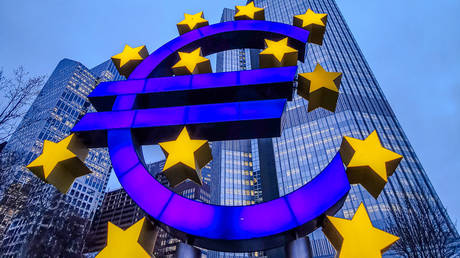
The European Central Bank (ECB) may be forced to raise interest rates despite the risk of further weakening the Eurozone economy, as even some of its more cautious policymakers are losing confidence that the oil supply shock triggered by the Iran war will fade quickly, according to an interview published by Politico.
Central Bank of Malta Governor Alexander Demarco, described by the outlet as a dovish policymaker – an official who typically favors lower interest rates to support economic growth – warned that the ECB may no longer be able to ignore inflation driven by the latest market turmoil and could eventually be forced to tighten monetary policy to prevent broader price pressures from spreading through the economy.
The prospects of looking through this shock appear to be fading now, given the prolongation of the conflict and the prospects of oil prices remaining higher for longer, Demarco said in the interview, published Tuesday.
The ECB kept its key deposit rate unchanged at 2% in April but warned that prolonged conflict and elevated energy prices could increasingly spill into broader inflation, as workers may demand higher wages and businesses may raise prices further.
Most economists surveyed by Reuters expect the ECB to hike rates by 25 basis points to 2.25% at the next meeting scheduled for June 11. They also anticipate at least two, potentially three, hikes in 2026 to combat rising energy-led inflation.
However, even a resolution of the Middle East war before that day may not cool energy prices enough for policymakers to stay put, Demarco warned.
Since the US and Israel attacked Iran in late February causing disruptions in the Strait of Hormuz, Brent crude briefly surged above $120 per barrel in late April and has continued trading around the $100 mark in recent weeks, compared with around $70 before the crisis.
Read more Is a hike necessary?Higher rates can in many instances help curb inflation by reducing demand across the economy and slowing how fast prices rise.
However, opponents argue that the ECB should avoid rushing into rate hikes, warning that higher borrowing costs cannot fix the underlying problem of disrupted oil supplies and could instead deepen the economic slowdown.
Both ECB Vice President Luis de Guindos and Bank of France Governor Francois Villeroy de Galhau have recently called for more data before tightening policy. Berenberg chief economist Holger Schmieding has argued that given weak growth and rising unemployment workers are unlikely to push through excessive wage demands.
Critics of tighter policy also argue that the current shock is being driven by geopolitics, meaning hikes risk repeating the ECB’s widely criticized 2011 decision to raise rates in an already fragile economy.
Controversial rate decision
Read more During the Eurozone sovereign debt crisis in 2011, the ECB raised interest rates twice as it tried to contain inflation driven by surging oil and commodity prices during the Arab Spring uprisings in the Middle East and North Africa. Political instability and conflict in major oil-producing countries, particularly Libya, pushed the price of Brent crude above $120 per barrel, driving Eurozone inflation beyond the ECB’s 2% target. At the same time, several Eurozone economies, including Greece, Italy, Spain, and Portugal, were already under severe financial strain following the 2008 financial crisis. Critics later argued that the ECB, then led by Jean-Claude Trichet, tightened policy at the worst possible moment, helping push the Eurozone economy back toward recession. The central bank eventually reversed course later that year under incoming President Mario Draghi.
More recently, many economists have argued that the ECB reacted too slowly during the energy crisis which followed the escalation of the Ukraine conflict in 2022. Policymakers initially treated the surge in energy pr







 20.5c
20.5c