America's enemies prepare to take the next major war into outer space
America's enemies prepare to take the next major war into outer space
The opening moves of the next major war could unfold hundreds of miles above Earth.
U.S. adversaries are looking at ways to blind American forces in future conflict by jamming communications, disabling GPS, using lasers to attack satellites or destroying them completely.
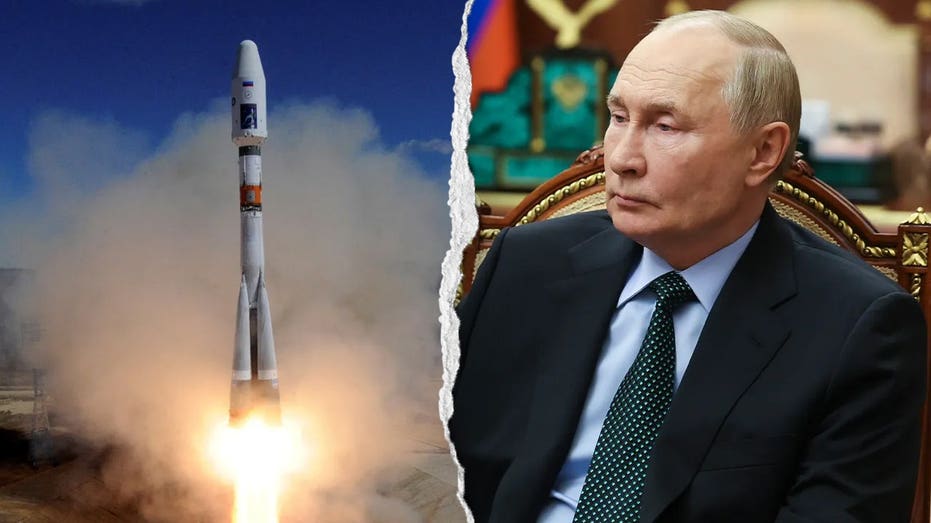
A sweeping new Defense Intelligence Agency assessment details how China and Russia are developing sophisticated ways to disrupt or destroy U.S. satellites. This includes a Russian satellite designed to carry a nuclear weapon into Earth's orbit.
American forces rely on satellites to communicate across battlefields, navigate ships and aircraft, track enemy forces, detect missile launches and guide precision weapons to their targets. Knocking those systems offline could leave forces below struggling to see, communicate and strike.
AMERICA'S NEXT WAR COULD REACH US SOIL, TOP ARMY GENERAL WARNS
"We can't do military operations the way that we do them today without satellites, without systems in space," Clayton Swope, deputy director of the Aerospace Security Project at the Center for Strategic and International Studies, previously told Fox News Digital.
"Whoever has space and can deny that to their adversary has a huge asymmetric advantage in a conflict," Swope said.
CHINA IS TAKING THE FIGHT TO THE STARS. AMERICA MUST RECLAIM SPACE SUPREMACY
Beyond the battlefield, satellites underpin everything from GPS navigation and communications to banking, transportation and the electric grid, meaning a large-scale attack in space could disrupt services millions of people rely on every day.
Chinese military thinkers have identified reconnaissance, communications, navigation and early-warning satellites as potential targets for attacks designed to "blind and deafen the enemy," according to the report. DIA assesses Beijing could begin threatening or gradually degrading an adversarys space architecture during a crisis as a "prelude to war."
Russia, meanwhile, views U.S. reliance on satellites for precision strikes and projecting military power as a "critical vulnerability" to exploit during a conflict. Its doctrine envisions attacks ranging from temporary jamming and blinding satellite sensors to the outright destruction of spacecraft and the infrastructure supporting them.
DIA describes the threat as a continuum, beginning with attacks that can temporarily disrupt a satellite without destroying it and escalating through cyber and orbital attacks to kinetic weapons and, ultimately, a nuclear detonation in space.
Some of those tactics have already made their way into active conflict. During Operation Epic Fury, the U.S. and Iran "took offensive actions against each other's space capabilities to degrade and disrupt military actions on both sides," according to DIA. The report does not detail those operations, but says jamming near the Strait of Hormuz in June disrupted U.S. aircraft and shipping vessels.
The Chinese military already practices jamming satellite communications and GPS during military exercises. Beijing also has ground-based lasers capable of disrupting or damaging satellites in low-Earth orbit, and DIA assesses it could field space-based directed-energy systems by the late 2020s.
Other Chinese systems can get much closer. The Shijian-17 satellite has a robotic arm capable of grappling another satellite, while