Pentagon races to buy 10X more missiles as Iran war dwindles arsenal, threatens readiness for China aggression
Pentagon races to buy 10X more missiles as Iran war dwindles arsenal, threatens readiness for China aggression
The Pentagon is preparing a dramatic course correction after years of purchasing key missile-defense interceptors in relatively modest numbers — even as China built up the world's largest arsenal of conventional ballistic and cruise missiles and the U.S. increasingly focused on the threat of a conflict in the Indo-Pacific.
Following a string of missile-heavy conflicts, U.S. air defenses have been used repeatedly to protect Israel, American forces in the Middle East and Navy ships in the Red Sea, drawing down some of the Pentagon's most sophisticated and difficult-to-replace munitions.
The Pentagon's abrupt course correction raises a question that has taken on new urgency after years of missile-intensive warfare: Why did the U.S. wait so long to build deeper interceptor magazines?
US DRAINS CRITICAL MISSILE STOCKPILES IN IRAN WAR AS YEARSLONG REBUILD LOOMS
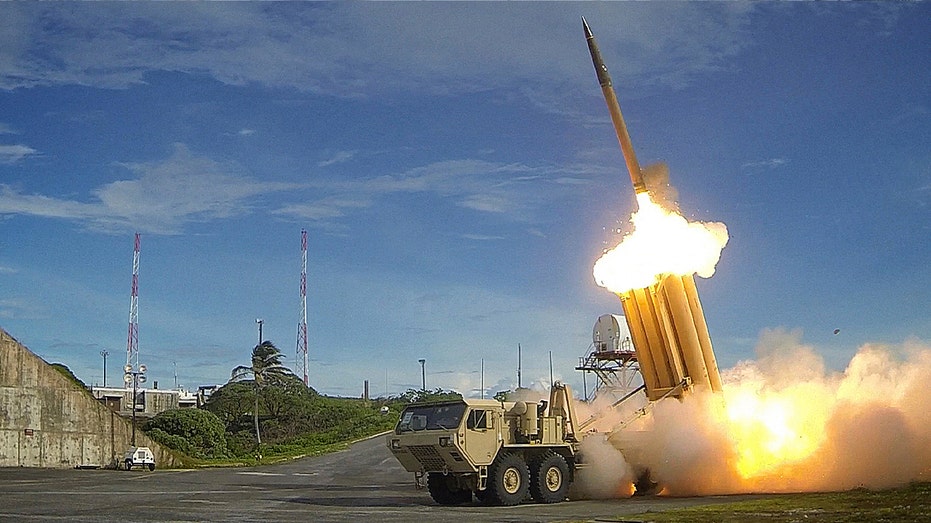
The Army's fiscal 2027 budget, reviewed by Fox News Digital, calls for a massive increase in purchases of Patriot Advanced Capability-3 Missile Segment Enhancement (PAC-3 MSE) and Terminal High Altitude Area Defense (THAAD) interceptors, part of a broader effort to rapidly expand a munitions industrial base that cannot be scaled overnight.
The shift is particularly striking when compared with what the military was buying only a few years ago.
The budget documents show PAC-3 MSE procurement at 230 missiles in fiscal 2024 and 214 in fiscal 2025. The same FY2026 budget book shows the Army Requirements Oversight Council had increased its acquisition objective for the missile from 3,376 to 13,773 in April 2025 — more than quadrupling the requirement.
"The problem is 25 years of not buying enough munitions," retired Rear Adm. Mark Montgomery, a senior fellow at the Foundation for Defense of Democracies, told Fox News Digital.
HEGSETH DISMISSES FOOLISH US STOCKPILE CONCERNS AS IRAN CONFLICT TESTS MUNITIONS
PAC-3 MSE and THAAD are among the military's most important defenses against ballistic missile attacks. Patriot batteries provide shorter-range protection for troops, air bases and other critical assets, while THAAD is designed to intercept ballistic missiles at higher altitudes and greater distances, giving commanders another layer of defense against incoming attacks.
Reuters reported this week that the Army has used "virtually all" of its ATACMS and Precision Strike Missile inventories in just five months of conflict with Iran, while also drawing heavily on Patriot and THAAD interceptors.
The rapid expenditure, coupled with years of relatively modest procurement, raises a broader question: What would happen in a longer conflict against a near-peer adversary like China?
"The shortage was entirely foreseeable, and there have been arguments surrounding interceptor and munition procurement numbers for decades," Jim Fein, a defense industrial base researcher at the Heritage Foundation, told Fox News Digital. "Ultimately, budgetary tradeoffs were made, and those arguing for other programs won out.
The Pentagon budget documents reviewed by Fox News Digital show years of relatively modest procurement for some of the military's most important missile-de








 28.2c
28.2c