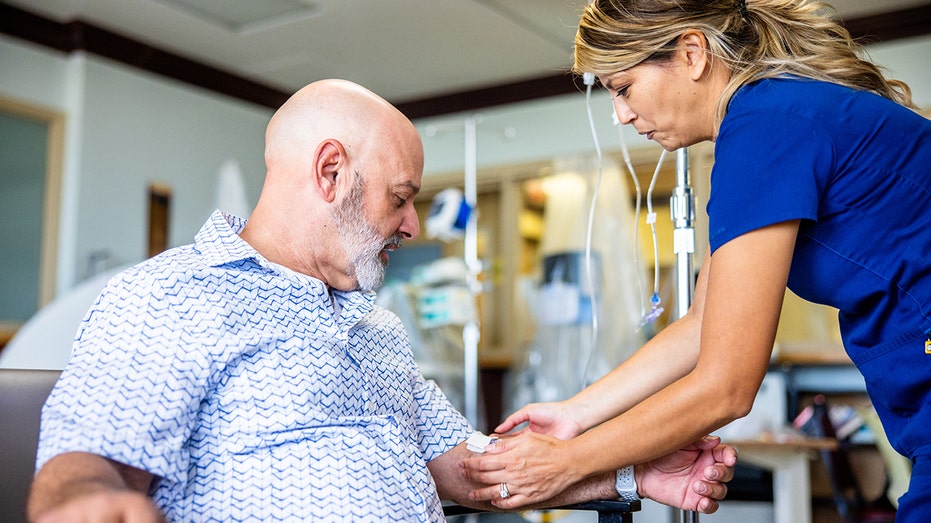
ROBERT F KENNEDY JR, DR MEHMET OZ: 250 hospitals join the fight for healthier food

ROBERT F KENNEDY JR, DR MEHMET OZ: 250 hospitals join the fight for healthier food
When Americans enter a hospital, they expect to receive care that helps them heal. They trust their doctors, nurses and other healthcare professionals to provide the best possible treatments and give them the greatest chance of recovery.
Yet too often, the food our nations hospitals serve contradicts that mission.
Patients recovering from surgery, living with chronic diseases or managing serious medical conditions may be served hospital meals featuring highly processed foods, refined carbohydrates, added sugars and other ingredients that do little to support their recovery.
RFK JR HAILS FIRST US HOSPITAL TO PROMISE HEALTHIER MEALS: 'WE HAVE A TEMPLATE'
Its a contradiction that should concern every American. And its one were determined to change.
Today, we announce that 250 hospitals across the United States have joined the Make Hospital Food Healthier Pledge, a nationwide initiative the Department of Health and Human Services (HHS) and the Centers for Medicare & Medicaid Services (CMS) launched to improve the nutritional quality of meals that hospitals serve to patients and staff.
AOC SAYS MAHA ADVOCATES' FIGHT 'ISN'T PARTISAN' AS SHE BLASTS HEALTHCARE SYSTEM FOR FUELING 'A TON OF ANXIETY'
These commitments reflect a growing recognition among Americas healthcare leaders that food is an essential part of good medicine, and hospitals should demonstrate that through the meals they serve.
Under President Donald Trumps leadership, the Make America Healthy Again movement is fundamentally rethinking the role of nutrition in American healthcare.
But transforming American healthcare requires more than changing federal policies; it requires changing the environments in which Americans receive care.
Hospitals can help change those environments. They care for our most vulnerable citizens, educate millions of patients and families, and earn their communities trust.
Nutrition is central to each of these responsibilities.
For patients recovering from surgery, fighting infections or managing chronic illnesses, proper nutrition can support wound healing, preserve muscle mass, strengthen immune function and improve recovery. Malnutrition, by contrast, correlates with longer hospital stays, more complications and greater healthcare costs.
THIS AMOUNT OF DELI MEAT ASSOCIATED WITH HIGHER DEMENTIA RISK IN COMPELLING NEW REVIEW
Hospitals also have an opportunity to teach patients habits that can improve their health long after discharge.
Consider a patient who enters the hospital for complications of Type 2 diabetes. That patient may receive excellent medical treatment and counseling about the importance of healthy eating. But if the meals the hospital serves during their stay contradict that advice, what message are we sending?
A hospital meal should reinforce the care plan, not undermine it.
There are approximately 6,100 hospitals in the United States, collectively accounting for more than 35 million hospital admissions each year. The broader A