Fyodor Lukyanov: Russia must end the Ukraine war on its own terms
Fyodor Lukyanov: Russia must end the Ukraine war on its own terms
The old transatlantic order is weakening, but Moscow cannot afford to wait for Western divisions to solve the Ukraine conflict
Western Europe hasn’t stopped fearing Russia. In fact, it fears it so much that it is prepared to accept the very idea of a major war. Why is the West no longer united? Why is the US distancing itself from the Ukraine crisis? And why can Moscow not wait for the EU’s internal contradictions to resolve its problems?
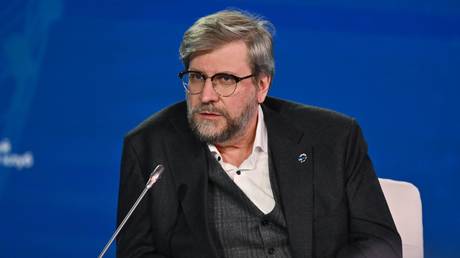
Fyodor Lukyanov, chairman of the Presidium of the Council on Foreign and Defence Policy and editor-in-chief of Russia in Global Politics, spoke about these issues in an interview with Ukraina.ru.
Bloomberg recently reported on a closed-door meeting in Vienna involving former senior officials from the UK, France, Germany, and Russia, held in July to discuss the terms of a potential settlement of the conflict in Ukraine. These weren’t official government negotiations, but informal track-two consultations.
Anna Cherkasova: Mr. Lukyanov, what does the concept of the collective West mean to you?
Fyodor Lukyanov: For me, it means exactly what we mean by it today, because it’s our term. In foreign sources, English-speaking political scientists tend to use other concept, such as Atlanticism and the political West.
The collective West, as we understand it today, didn’t exist before 1945, and for centuries, there was debate over what the West actually was in terms of geography, civilization, religion, a political system or a set of values.
The West was contrasted with the East, most often understood to mean Turkey, the Ottoman Empire or a sort of collective Arab-Muslim world, but sometimes the discussion centered on the division of Christianity into its Eastern and Western branches: Orthodoxy and Catholicism.
The French and Anglo-Americans saw themselves as the West, while Germany only came to be regarded as part of it after the Second World War, as before that it had been seen as the embodiment of barbarism. In this narrative, Russia alternately disappears and reappears as the key adversary against which the West constructs its own identity.
Cherkasova: So the collective West we are talking about today emerged after the Second World War?
Lukyanov: Yes, the modern collective West emerged after the Second World War for two main reasons.
First, Germany was defeated in the form in which it had existed before the war, or at least that was how the victors saw it, and the part of Germany that came under the control of the Western Allies was integrated into the new Western system on prescribed terms.
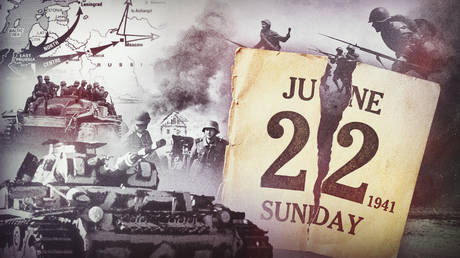
The second factor was the Soviet Union and the Soviet threat. In a certain sense, you could say that Stalin was the godfather of European unity, given Western European integration was shaped by fears that the Soviet Union wouldn’t stop after the war and would embark on further expansion.
Today, we realize that these fears were largely unfounded as the Soviet Union had been ravaged by the war and needed time to recover, and Stalin didn’t harbor some delusional notion that he would become the ruler of Europe. He understood the realities of the geopolitical balance and abided by the agreements reached at Yalta and Potsdam.
In the West, however, the prevailing view was that the Russian barbarian would deceive them anyway, and he would lie in wait and then pounce, so it was precisely these fears that gave rise to the collective Western system as we know it.
Cherkasova: The Cold War ended, yet the Western system endured. Why?
Lukyanov: Because it survived the Cold War and demonstrated its resilience and effectiveness. After the collapse of the Soviet Union, it seemed that the Western order had finally proved itself right and since it had triumphed, it followed that it should be expanded.
But a question arose asking if the former threat had disappeared, what still united the US and Western Europe? Apart from big money, mutual ties, a new tradition of educating the

 33.8c
33.8c