International payments a ‘tool of new warfare- top Russian banker
International payments a ‘tool of new warfare- top Russian banker
The transaction landscape is undergoing a “global shift” as it breaks into multiple competing systems, PSB chairman Pyotr Fradkov has said
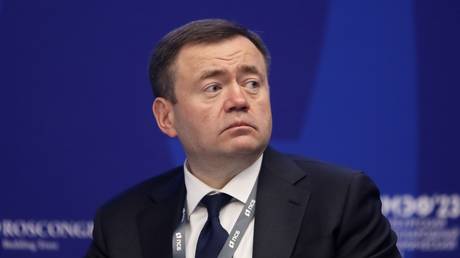
Cross-border payments have become a tool of new warfare, as countries increasingly seek to shield their international trade from foreign pressure, Pyotr Fradkov, chairman of Russia’s Promsvyazbank (PSB), has said.
Russia has accelerated its transition from a Western-dominated financial framework after the escalation of the Ukraine conflict in 2022, unprecedented US and EU sanctions, and the move to freeze Moscow’s sovereign assets abroad.
In an interview with the Russian business daily RBK published on Monday, Fradkov argued that while the world remains within the existing paradigm of the global payment system, alternative mechanisms are already rapidly emerging.
The entire world has faced the reality that payments have become the most complicated topic in finance. This is essentially a tool of ‘new warfare,’ he said.
Fradkov noted that while Russia is to some extent trying to move away from the dollar, this alone will not eliminate dependence on foreign financial infrastructure because export transactions conducted in rubles – expected to exceed 53% for 2025 – or digital assets still rely on external compliance procedures, giving outside actors potential leverage.
He argued that this vulnerability is pushing countries toward a different model. We are witnessing a global shift where the international payment infrastructure is beginning to be replaced by a list of national systems, Fradkov said, citing the examples of Russia’s state-backed A7 cross-border payment system, China’s CIPS network, and the growing use of stablecoins.
The banker argued that a modern payment framework can involve a combination of traditional banking, digital assets, and stablecoins, while stressing that it should not merely respond to existing restrictions but also establish a modern system that can be competitive in the international market.
Regarding stablecoins, Fradkov warned that they should not be regarded as a given and assume that this toolset will be used for decades, adding that some tokens – such as USDT, which is pegged to the US dollar – are tied to the American economy and compliance architecture.
Russian Prime Minister Mikhail Mishustin said in January that national currencies accounted for 85% of the country’s foreign-trade settlements in the first ten months of 2025, with the ruble used in more than half of transactions. Moscow has also improved its Mir national card system, and recently legalized cryptocurrency trading for foreign operations.






 25.2c
25.2c