Knocking on the king-s door: Jamaica demands answers on slavery
Knocking on the king-s door: Jamaica demands answers on slavery
Decades in the making, the September 7 filing brings a direct legal challenge against the British Crown for its ties to the slave system
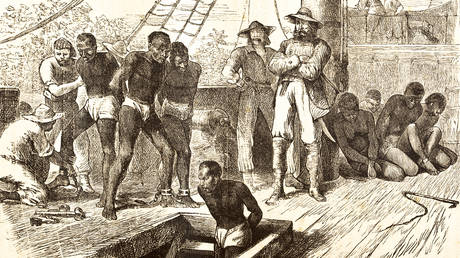
On September 7, 2026, a high-level Jamaican delegation delivered a historic legal petition to Buckingham Palace addressed to King Charles III. Its objective was to compel the monarch, as Jamaica’s head of state, to refer to the Judicial Committee of the Privy Council, the island’s highest court of appeal, three questions that have haunted the British Empire for centuries. Was the forced transportation of Africans to Jamaica and their subsequent enslavement lawful? Did this system constitute a crime against humanity? Does the United Kingdom bear an obligation to make reparation for slavery and its enduring consequences?
Culture Minister Olivia Grange, who led the delegation, shared a photo on X of herself holding the document aloft, captioned: The petition has been filed. King Charles III was not present at the handover. British media reported he was on vacation at the time, though Buckingham Palace said it had worked closely with the Governor General of Jamaica to ensure the petition was properly lodged.
Why the date is no coincidenceThe day before, on Sunday, September 6, the delegation had taken part in a church service in south London under the theme of remembrance, justice and repair, ahead of the formal filing the following day. This timing is no accident: September 6 commemorates the 1781 departure of the slave ship Zong, aboard which more than 140 enslaved Africans were thrown into the sea so their owners could collect an insurance payout. That crime, unpunished for 245 years, now stands as the symbol of a justice the diaspora refuses to let fade into oblivion.
In relation to the wrongs that were done, we want answers, Grange told the Associated Press the day before the filing. Once we get those answers, then our attorneys will determine what the next move is.
This petition is part of a strategy, built step by step by Jamaica’s National Council on Reparations chaired by Laleta Davis Mattis, with the support of a legal subcommittee led by attorney Bert Samuels, and a team of UK lawyers. The Caribbean Community (CARICOM) has thrown its full weight behind the effort proof that this question reaches beyond the borders of a single island. The entire post-slavery Caribbean is rising behind Jamaica.
The UN slavery resolution as a first stepBut it is precisely here that Jamaica’s fight joins Africa’s own, and this link must now be made visible, since Western media have worked hard to keep it quiet. On March 25, 2026, the United Nations General Assembly , on Ghana’s initiative, resolution A/RES/80/250 – the very first resolution in UN history devoted exclusively to slavery and the transatlantic slave trade.
One hundred and twenty-three states voted in favor. Only three opposed it: the United States, Israel, and Argentina. Fifty-two countries, mostly European including the United Kingdom itself, chose to hide behind abstention.
Read more The resolution designates the transatlantic trafficking of Africans and racialized chattel enslavement as the gravest crime against humanity. Ghanaian President John Dramani Mahama, speaking on behalf of the African Group of 54 states, the UN’s largest regional bloc, declared that voting for the text meant standing on the right side of history. It calls for the restitution of looted cultural property, formal apologies, and opens the door to the consideration of financial compensation. This is an international normative framework, patiently built by the African Union since February 2024, when it proclaimed 2025 the Year of Justice for Africans through Reparations for Slavery, Colonialism, and Apartheid.
Jamaican jurist Bert Samuels was not mistaken when he stated that this UN resolution strengthens Jamaica’s legal position against London. Here is the thread that binds Accra to Kingston, the African mot




 29.1c
29.1c