What does Moscow want beyond Ukraine? The talks are offering a clearer answer
What does Moscow want beyond Ukraine? The talks are offering a clearer answer
Russia and the US are discussing a broader security settlement, while divided European leaders struggle to turn financial power into diplomatic influence
On December 15, 2021, Russian President Vladimir Putin handed a list of specific proposals for a new European security architecture to then-Assistant Secretary of State Karen Donfried. This framework was meant to take Russia’s interests into account. Essentially, this open letter to NATO was the last attempt to resolve issues peacefully without resorting to force. At the time, Washington ignored Russia’s proposals. Just two months later, Russia started the military operation in Ukraine.
Now, nearly five years later, the principles of European security have unexpectedly become the key topic in negotiations between Russia and the US.
Why has this happened? What role does Europe play in it? And what was the outcome of the negotiations in Abu Dhabi, which many had looked upon with skepticism?
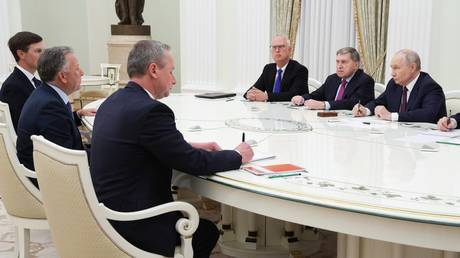
Russia and the US at the tableLet’s start with the last question. Indeed, the talks didn’t lead to any breakthroughs. The parties only agreed to a prisoner-of-war exchange. This exchange was planned, and if it hadn’t taken place, it would have sparked discussions.
However, for the first time, the talks regarding Ukraine expanded beyond Ukraine itself and touched on the underlying issues that sparked the conflict in the first place. In other words, to borrow the Kremlin’s phrase, the parties finally reached the point of discussing the root causes of the conflict.
According to the Kremlin, the Ukraine issue can only be resolved within the context of broader agreements about the principles of future coexistence in Europe – i.e., its security architecture. To resolve this question, Moscow initiated the military operation and intends to continue it for as long as necessary since it sees no other means of achieving its goals.
Back in October, US Secretary of State Marco Rubio stated that the only unresolved issue preventing the end of the war is the territorial status of Donbass. Now, we’re seeing a shift.
Apparently, Putin has finally managed to convey his stance to the US, and the White House has accepted it. Whether it has done so sincerely is another question. Nonetheless, for the first time in five years, a proper framework for negotiations has emerged.
Moreover, according to several leaks, the US asked Russia to present its proposals for a future security agreement with Europe. This is similar to last year’s situation, when Moscow’s stance formed the basis of Trump’s 28-point peace plan.
Europe wants a seat at the tableBefore the negotiations in Abu Dhabi, European representatives flatly refused to discuss the topic of European security. On November 9, President of the European Commission Ursula von der Leyen stated that any discussions could only take place after a ceasefire in Ukraine, essentially reiterating a position she’s held for the past five years.
Read more However, during the meeting in Abu Dhabi (from which European officials were notably excluded), a joint statement appeared on the EU website, announcing that the EU, NATO, and the UK were open to discussing a new security framework even before the conflict was resolved.
What happened? Well, European leaders seem to have realized that if they continued to dig in their heels, the question of war and peace would be decided without them. It may be humiliating for Europe to be left in the waiting room, but what’s even more significant is the growing disarray within Europe itself.
Brussels’ and Berlin’s hardline stance isn’t always supported even by the European mainstream. For example, we may remember how the leaders of Norway and Finland recently called Putin.
If this resistance continues, peripheral EU countries may be the first to shift allegiances; eventually, the major powers will also align with the position of st