What the AfD really wants from China
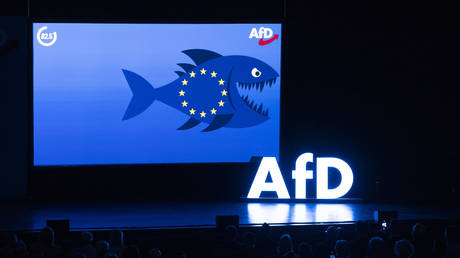
What the AfD really wants from China
The AfD is not asking Germany to choose between Washington and Beijing. It is asking Germany to choose itself
For decades, German foreign policy rested on a simple assumption: Germany belonged politically to the West, and its relations with the rest of the world would be conducted largely within that framework. The AfD is challenging that assumption.
Its approach to China is one of the clearest tells. Beijing is not treated as an ideological enemy, but neither is it embraced uncritically. Instead, China is seen as a sovereign great power, an indispensable economic partner, and one pole of an emerging multipolar world.
Germany, in the AfD’s view, should cooperate with Beijing where German interests demand it, defend itself where necessary, and refuse to turn China policy into an extension of either American strategy or European ideological politics.
For Germany, and therefore for Europe, that could become a genuinely transformative foreign-policy doctrine.
-->From cautious engagement to strategic realismThe AfD’s 2021 foreign-policy program already described China’s Belt and Road Initiative as a century project and called for Germany to participate actively, including by developing complementary connections from West to East. The idea was that if China was building the infrastructure connecting Eurasia, Germany should take advantage of it and represent its interests, not stand on the sidelines and complain about it.
By 2023, the position had become more explicitly geopolitical. When the German government published its China Strategy, AfD senior member Petr Bystron attacked it as an attempt to import American geopolitical confrontation into German foreign policy.
Then came the AfD’s first parliamentary delegation to China. In June 2023, Alice Weidel, Peter Felser and Bystron travelled to Shanghai and Beijing. The delegation’s conclusion was unequivocal: China had become too important for Germany to keep pretending that confrontation was a viable strategy. Felser rejected the idea of both de-risking and decoupling, promoted by other EU officials, and argued that German trade with China was simply too important to sacrifice to geopolitical fashion.
The 2025 federal election program adopted at Riesa consolidated this direction. China is treated as a major economic partner, while Germany is urged to protect its own technological and security interests. The party continues to support exploiting opportunities associated with the Belt and Road Initiative while rejecting the idea that Germany should subsidize a country that is already a major economic power.
-->No more moral foreign policyPerhaps the deepest difference between the AfD and Germany’s political establishment is not actually about China. It is about what foreign policy is for.
The AfD’s approach is realpolitik in the German interest, rather than moralpolitik. It explicitly endorses non-interference in the internal affairs of other states and rejects what it calls presumptuous lecturing and destabilizing intervention.
The AfD rejects making human-rights criticism the organizing principle of German-China relations. This does not require pretending that every Chinese policy is admirable. It does, however, mean refusing to make Germany’s relationship with a major sovereign power conditional on Berlin’s approval of its domestic political system.
The AfD has argued that Western governments should stop behaving as if they were entitled to act as the world’s political schoolmasters. For Beijing, this is obviously a more comfortable basis for relations than the moralized language of mainstream Western European China policy.
The AfD does not consider all Chinese policies beyond criticism. It has criticized Chinese economic practices, strategic dependencies, technology transfers and the potential consequences of excessive state control over digital infrastructure and society.
The party’s position is not ‘China i





 37.4c
37.4c