Iranian hackers attacked our water systems. Here are 5 things our leaders need to do now
Iranian hackers attacked our water systems. Here are 5 things our leaders need to do now
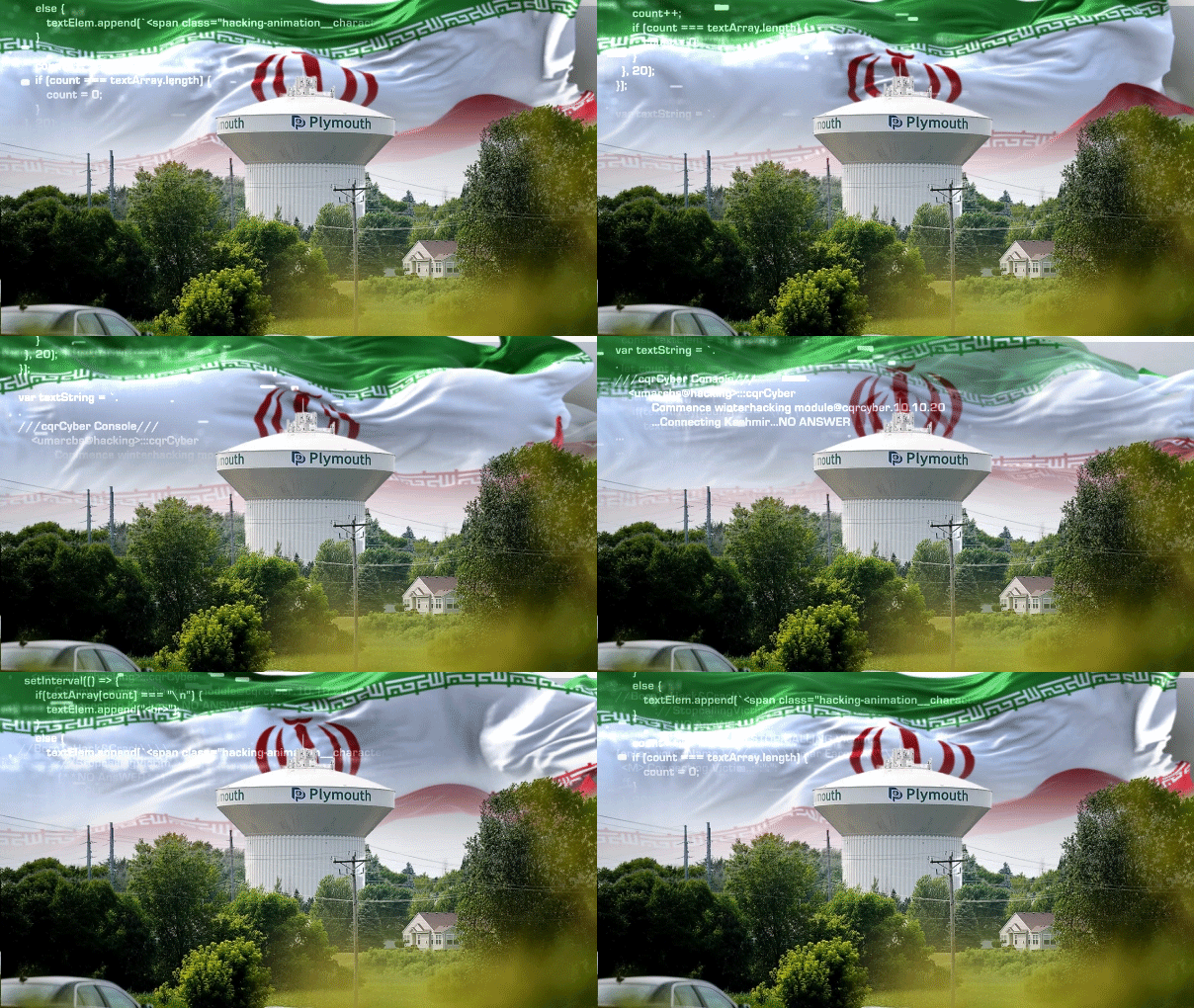
As tensions continue to rise between the United States and Iran, Iranian-affiliated hackers have reportedly reached into the heartland of America and targeted the systems that control a basic necessity of life: water.
More than 30 community water systems in Minnesota were targeted in a coordinated cyberattack in late July, with similar activity being identified in a handful of other states.
This should concern every American. But the most alarming part isnt simply who may have been behind the attack. Instead, its how little sophistication may have been needed to pull it off in the first place.
INVESTIGATORS BELIEVE IRANIAN HACKERS ARE LIKELY BEHIND CYBERATTACK ON MINNESOTA WATER SYSTEMS: REPORT
Early indications suggest this was not some unstoppable cyberweapon that no municipality could have anticipated. Instead, the attackers appear to have targeted operational technology that is connected to the internet and exploited the kinds of fundamental security weaknesses experts have been warning about for years.
And while Iranian-affiliated hackers may have carried out this particular attack – certainly representing an escalation in the ongoing U.S.-Iran conflict – the attack on Minnesota did not expose a vulnerability unknown to our nations leaders.
Instead, its further underscored the real-world consequences of weaknesses the federal government has been documenting for years.
For instance, in 2024, the Environmental Protection Agencys Office of Inspector General examined 1,062 drinking-water systems serving more than 193 million citizens. It found critical or high-risk cybersecurity vulnerabilities at 97 systems serving approximately 26.6 million Americans. Another 211 systems serving more than 82.7 million people had portals that were visible from outside their networks.
OUR ENEMIES FOUND A WEAKNESS IN ESSENTIAL TECHNOLOGY. WE MUST FIX IT … FAST
Put plainly, systems serving tens of millions of Americans could be discovered from the public internet. Exploiting these access points, as the inspector general warned, presented an opportunity for hackers to disrupt services and lead to potential physical damage to water infrastructure.
That is what raises the stakes far beyond the data breach Americans have become all too accustomed to reading about.
Of course, these breaches, whether involving a retailer or a credit bureau, can expose personal information and certainly inflict serious harm. That risk should not be minimized.
An attack on a water system, however, crosses a far more dangerous threshold – from compromising data to disrupting an essential service on which human life depends. Pumps can stop operating. Water supplies can be interrupted. An entire communitys health and safety can be placed at risk.
DSA CANDIDATE PUSHES FEDERAL AI DATA CENTER MORATORIUM WITH MICHIGAN EARLY VOTING UNDERWAY
The scope of this challenge extends far beyond Minnesota. According to the Government Accountability Office, nearly 170,000






 24.5c
24.5c