My father taught me the dignity of labor: We get to live, work and love
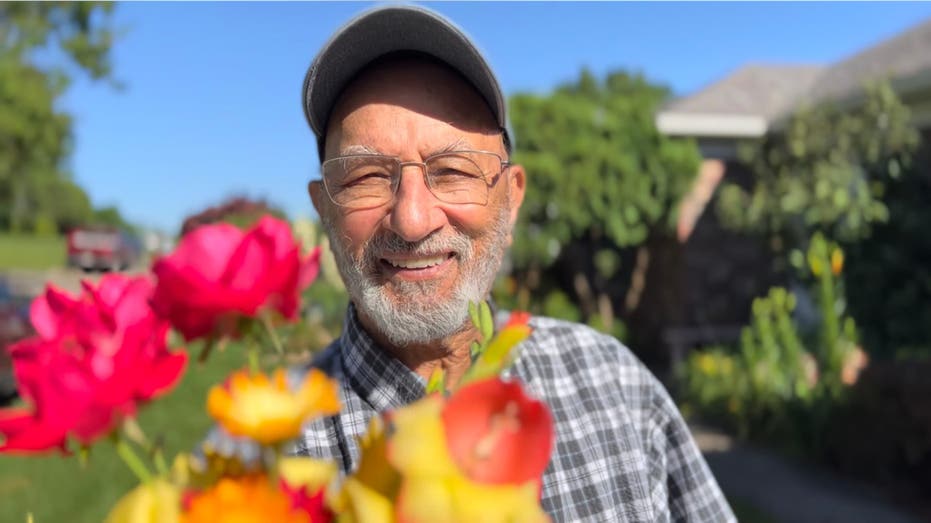
My father taught me the dignity of labor: We get to live, work and love
My father froze when he saw his professor washing cars.
It was 1962, and Zafar Nomani was a visiting teacher at Kansas State University in Manhattan, Kan., newly arrived from India on a fellowship. One day, riding past a church car wash, he spotted his professor among the people scrubbing down cars beside his students.
For the rest of his life, my father treasured that moment.
"I saw the dignity of labor," he would tell us.
More than six decades later, on this Labor Day weekend, my family is mourning my father, who died in early August at the age of 93 in our adopted hometown of Morgantown, W.V. And as I negotiate new relationships with his power washer, his weed trimmer, his tools and the daily chores that he quietly managed, pushing a cart at our local Kroger on Patterson Avenue, I find myself reliving – and rewriting – the story of my life with him.
For most of my life, I thought I was challenging the patriarchy. Now I realize I grew and became the investigative journalist that I am because of the patriarch in my life.
I arrived in America from India in the summer of 1969 as a four-year-old girl and I grew up in the 1970s with feminism, womens rights and Gloria Steinem, who died this week at 92, just a year younger than my father. I learned to interrogate male power, religious authority and the restrictions that societies imposed on women.
I still believe in the work of empowering women and girls.
But in my father's absence, I have come to understand something I failed to fully appreciate while he was alive: the quiet and largely invisible power of a good patriarch.
I spent much of my life believing my strength came from resisting my fathers authority; after his death, as I grieve his absence from this world, I recognize that much of my strength, intellect and purpose came from the invisible labor he performed to make my independence possible.
I thought I was overcoming the patriarch; I now see that – with his devoted and beloved wife beside him – my father was performing the quiet service that allowed me to become the woman capable of challenging him.
That epiphany has also changed the meaning of "labor" for me.
Labor, I now understand, isn't just the work we perform from nine to five, as Dolly Parton, another national treasure lost this summer, sang. Some of the most important labor of our lives is never entered on a time sheet. It is the ordinary caregiving through which people provide one another shelter, safety, security.
This summer, for two months, I helped care for my father with my family in hospital rooms at our local hospital. His last breath came in Room 8.
Amid the oxygen tubes, medications, alarms and fear, I fell in love with my father all over again. I resurrected the spirit of the girl who once lay against his belly listening to stories about the kings and queens of India. I remembered the girl who arrived in the U.S. At the time, my father was a Ph.D. student and our family lived in poverty in graduate-student housing in Piscataway, N.J., in a humble red two-bedroom home converted from military barracks on Bevier Road. In the winters, my parents turned on the oven to heat the home. But my parents still found a way to throw me a birthday party in our backyard.
The grievances and misunderstandings that accumulate over a lifetime fell away.
What remained was the gratitude my father had modeled for me through the way he lived his life.
His philosophy was not 'I have to,' but 'I get to'
My father never lived from the premise that life had victimized him. He didn't organize his days around the complaints of "I have to..." I have to work. I have to stud








 29.2c
29.2c