Robot dog could deliver your next package and an ad
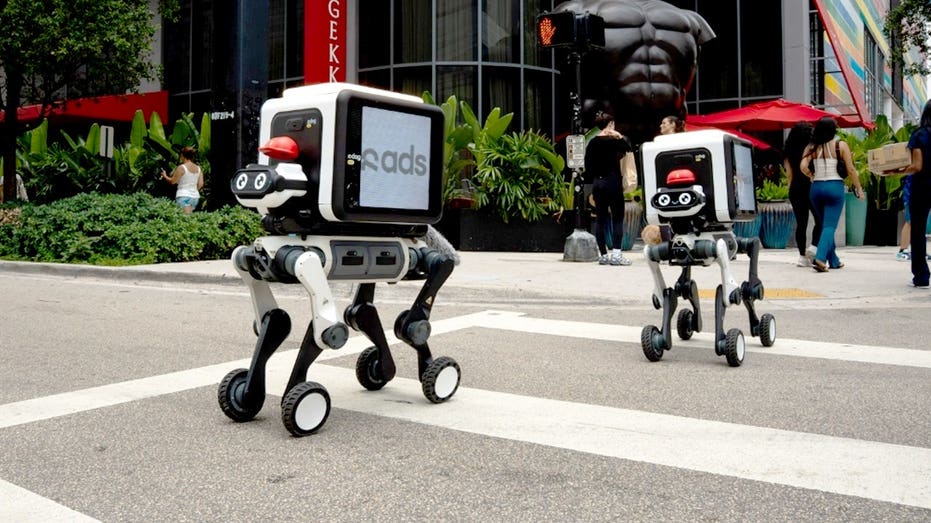
Robot dog could deliver your next package and an ad
We've covered robot dogs patrolling with police and training to handle terrain that could someday take them to the moon. We've even watched wheeled versions tackle some pretty wild ground. And whenever we show these machines, one question keeps coming up: What happens when they reach a flight of stairs? Well, Robot.com may have an answer.
Its new four-legged R-dog is built to carry packages where traditional wheeled delivery robots can get stuck. It can also show ads along the way, turning your future delivery into something of a moving billboard.
So, can R-dog really get your package closer to your front door while making the economics of robot delivery work? Let's take a closer look.
Missed CyberGuy LIVE? Watch the Protect Your Money replay
Our free CyberGuy LIVE class, Protect Your Money From Todays Biggest Threats, has ended, but you can still watch the full replay and download our financial protection checklist. Kurt "CyberGuy" Knutsson walks you through five simple ways to help defend yourself against AI scams, fraud, identity theft and financial hacks. Youll learn how to set up bank alerts, strengthen your account logins, protect your phone number, freeze your credit and help secure your retirement savings against unauthorized transfers. No technical experience is needed.
Get the free replay and checklist now at CyberGuyLive.com
ONE-WHEELED AI SECURITY ROBOT COULD PATROL YOUR PROPERTY
R-dog is Robot.com's latest concept for autonomous delivery. The San Francisco-based company unveiled it on Aug. 11. The idea tackles one of the most frustrating parts of robotic delivery: the final stretch to your door. A wheeled robot may handle the sidewalk just fine, only to meet a curb or staircase it cannot cross. Robot.com designed R-dog to cover those final 330 feet with a mix of wheels and articulated legs.
Each leg ends in a wheel, so R-dog can roll efficiently across flatter ground. When the route gets more difficult, those flexible legs are designed to help it deal with stairs, curbs and other obstacles. The cargo compartment forms most of the robot's body. Robot.com says it can carry food orders and standard packages inside.
And yes, it definitely looks like a robot dog. There is even a tail, which gives the machine a friendlier appearance than your average delivery box on wheels. That personality may be more than decoration. Robot.com wants people to notice R-dog, interact with it and feel comfortable when it appears in public spaces. As you will see, that becomes especially important once advertising enters the picture.
Getting a delivery robot across town can actually be easier than getting it from the sidewalk to your front door. Traditional delivery robots tend to perform best on predictable surfaces. Smooth sidewalks work well because wheels are efficient and relatively simple.
Then the terrain changes. A staircase can end the trip. A high curb can cause trouble. Even an awkward building entrance may force someone to step in. That creates an obvious weak point in a system that is supposed to reduce human involvement. Robot.com wants R-dog to keep going when a standard sidewalk robot would have to stop.
Its four-legged design could also expand the places where autonomous delivery makes sense. Campuses, apartment complexes and neighborhoods can all include routes that become difficult for wheels alone. Of course, get






 39.6c
39.6c