Supreme Court to scrutinize key pillar of Trump deportation machine in blockbuster case
Supreme Court to scrutinize key pillar of Trump deportation machine in blockbuster case
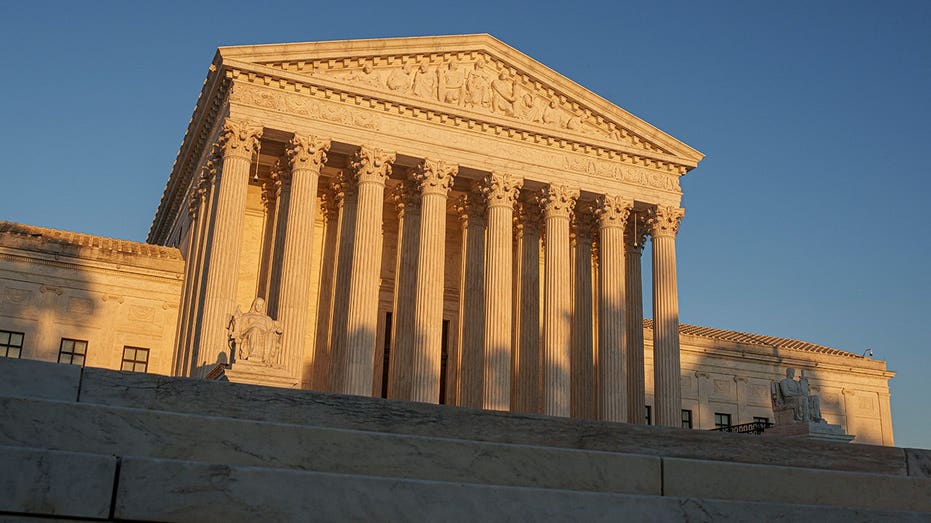
The agreed Thursday to hear a blockbuster challenge to ICE's mandatory detention policy after the Trump administration asked the justices to review the case.
The outcome of this case will determine whether criminal noncitizens held in detention while awaiting deportation are entitled to bond hearings after lengthy periods behind bars, a policy which has caused a split between lower courts.
Nine federal appeals courts have rejected the Trump administration's interpretation of the 1996 Illegal Immigration Reform and Immigrant Responsibility Act. The case now before the Supreme Court stems from a ruling by the Second Circuit Court of Appeals. The Fifth and Eighth Circuits have taken the opposite view, ruling that the Trump administration may require the mandatory detention of certain noncitizens — including illegal immigrants and lawful residents facing deportation — without offering them bond hearings.
The High Court's decision comes after Democratic New York Gov. Kathy Hochul attempted in August to thwart the Trump administration's efforts to have the issue heard by pardoning a criminal alien who had been held in immigration detention for nearly three years, effectively rendering that earlier case moot.
While Solicitor General John Sauer agreed in September that the earlier case was effectively dead, he vowed to find a new vehicle to resolve whether criminal noncitizens are entitled to bond hearings under the Due Process Clause of the Fifth Amendment.
The man at the center of the administrations latest petition, identified in court papers as D.C., is a 62-year-old Dominican citizen who illegally entered the United States and has four criminal convictions, according to court records.
In 1997, D.C. was charged with multiple drug offenses, including selling and possessing a controlled substance. He failed to appear for trial, was convicted by a jury and sentenced in absentia to three to nine years in prison, but did not serve that sentence until 2024. In 2007, he was charged with possessing a forged instrument after presenting false identification to police and again failed to appear in court.
In 2016, D.C. faced several charges stemming from a domestic dispute, including second-degree strangulation, third-degree assault and acting in a manner to injure a child under 17. He pleaded guilty to criminal obstruction of breathing or blood circulation and also resolved his earlier forged-instrument case with a guilty plea. Later that year, he pleaded guilty to criminal contempt.
D.C. was finally arrested on the outstanding warrant from his 1998 drug conviction in April 2024. After completing his state sentence in September 2025, ICE immediately detained him while his removal proceedings continued.
The district court later ordered that D.C. receive a bond hearing under binding Second Circuit precedent but denied his separate request for immediate release.
The case also asks who bears the burden of proving whether continued detention is warranted. The Second Circuit ruled that the government must prove by clear and convincing evidence that a detainee should remain in custody.
Oral arguments for the case will likely be heard in January.
This story is developing and will be updated.





 33.6c
33.6c