Bab el-Mandeb Strait faces growing threat as Houthi attacks raise fears of a second Hormuz
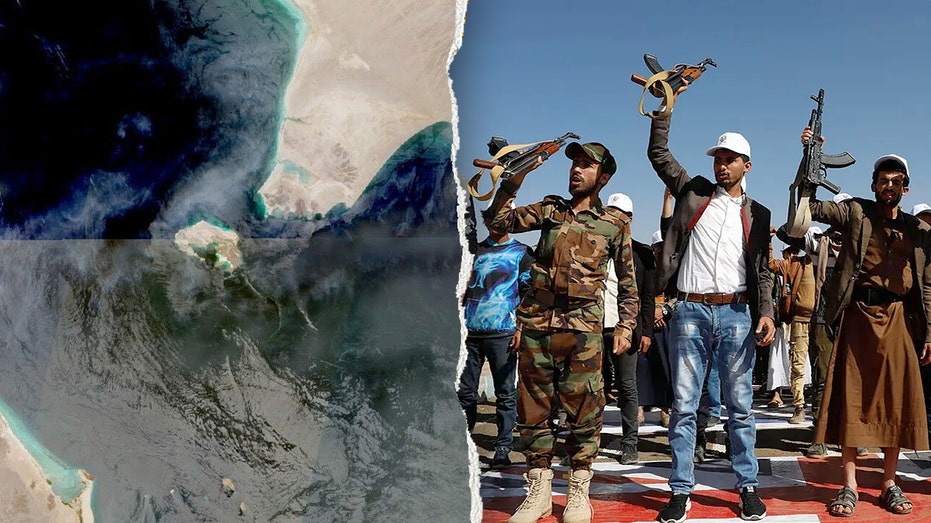
Bab el-Mandeb Strait faces growing threat as Houthi attacks raise fears of a second Hormuz
The Iran-backed Houthis escalating attacks on shipping through the Bab el-Mandeb Strait are raising a growing strategic question: Could the waterway become the next Strait of Hormuz?
The answer is complicated by the geography — and by Yemen itself. Unlike Hormuz, where Iran can directly threaten shipping from its own coastline, Tehrans leverage over Bab el-Mandeb depends largely on its Houthi allies. And the country overlooking the strait is fractured among competing armed and political forces, leaving the U.S. and its regional allies confronting a threat that may be difficult to solve with naval power alone.
The danger was underscored Tuesday when the Houthis attacked the Egyptian-owned cargo ship Tihamah in Bab el-Mandeb. Four crew members — three Pakistanis and one Indonesian — were killed, according to Yemeni and Pakistani officials, while two Yemeni rescuers were killed when the Houthis struck again after rescue crews arrived, Yemens Coast Guard said. Reuters reported that the fatalities, if confirmed, would be the first deaths in a Houthi strike on shipping since the U.S.-Iran war began Feb. 28.
IRAN-BACKED HOUTHI THREAT IN RED SEA COULD LEAD TO MAJOR US POLICY SHIFT, ANALYSTS SAY
The Bab el-Mandeb Strait, is located between Yemen and the Horn of Africa, connects the Gulf of Aden and Arabian Sea to the Red Sea and, farther north, the Suez Canal and the Mediterranean. It is a crucial route for energy and commercial shipping. The Suez Canal and Egypts SUMED pipeline effectively form the northern end of the same Red Sea corridor.
But the southern side of that corridor borders a country that has been at war for more than a decade.
The Houthis control the capital, Sanaa, and much of northern Yemen, while the internationally recognized, Saudi-backed government and an array of allied or competing groups control areas elsewhere. The Southern Transitional Council, a separatist movement that has been backed by the United Arab Emirates, has been a major force in the south.
That fragmentation is becoming increasingly relevant to the security of the waterway.
IRAN-BACKED TERROR PROXY HOUTHIS THREATEN FRESH ATTACKS AFTER YEMEN AIRPORT STRIKE
Amr Al Bidh, the STCs foreign affairs chief, told Fox News Digital that naval forces can defend individual vessels but cannot by themselves remove the threat posed by Houthi-controlled territory overlooking the maritime route.
"Naval presence protects individual ships. It does not take away Houthi launch sites, it does not interdict the smuggling routes that resupply them and it does not hold terrain," Al Bidh said.
He said that "you have to be on the ground" to ultimately secure Bab el-Mandeb.
The deterioration comes amid a broader escalation in Yemen. U.N. Special Envoy Hans Grundberg told the Security Council Thursday that the country faces its most serious threat of a return to large-scale war since the U.N.-brokered 2022 truce, warning that renewed Houthi attacks on commercial vessels r







 40.1c
40.1c