Robot learns to dismantle broken machines
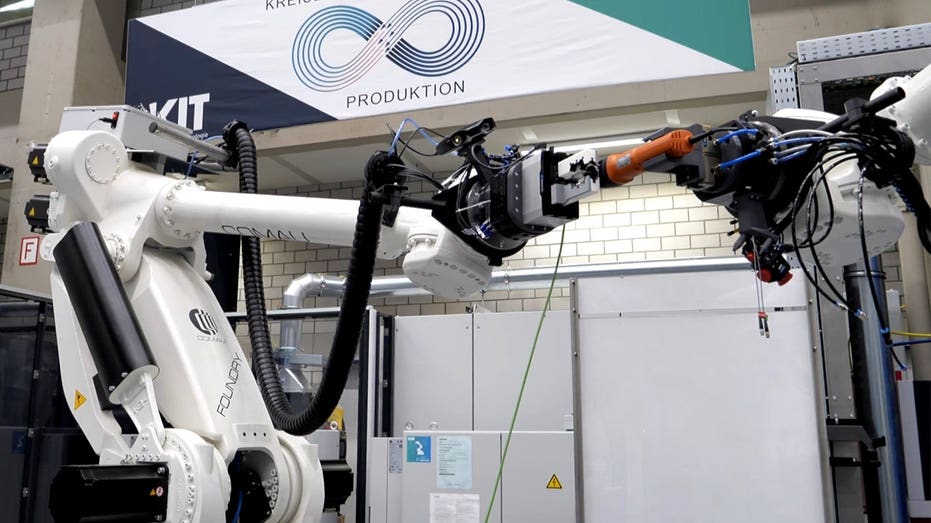
Robot learns to dismantle broken machines
Robots have spent decades helping build the products around us. Now researchers are teaching them another skill that could become increasingly important: taking those products apart when something goes wrong.
More than 4.6 million industrial robots are already operating worldwide. Meanwhile, demand for industrial robots continues to grow as manufacturers automate more production. That creates an obvious question. What happens to all those machines and other complex products when parts wear out or fail?
Researchers at the Karlsruhe Institute of Technology in Germany have developed a robotic disassembly system designed to tackle that problem. Instead of assuming every screw and component will behave perfectly, the system plans for the messy reality of old machines. A screw may be stuck. A component may already be missing. The machine may no longer match the original design. The robot can figure that out as it works and change its plan along the way.
New! Free live CyberGuy class: Protect Your Money From Todays Biggest Threats
Join us Saturday, August 29, at 10 AM ET for a free CyberGuy LIVE class covering five simple steps to help defend yourself against AI scams, fraud, identity theft and financial hacks. Kurt "CyberGuy" Knutsson will explain how to set up bank alerts, strengthen your account logins, protect your phone number, freeze your credit and help secure your retirement savings against unauthorized transfers. No technical experience is needed. Youll also receive our financial protection checklist, and every registrant will get a link to the class recording afterward.
Reserve your free spot today at CyberGuyLive.com.
Building something in a factory can be incredibly predictable. A robot knows which part comes next. It knows where the screws belong. Every movement can follow a carefully programmed sequence.
Taking an old machine apart is a very different job. Years of use can leave parts corroded or damaged. Previous repairs can also change how a product fits together. That uncertainty creates a huge problem for traditional automation because one unexpected obstacle can derail the entire disassembly sequence.
Researcher Jan Baumgärtner puts the challenge in practical terms. When assembling something new, the steps are clear. When dismantling something broken, many things can go wrong. That means a robot needs more than instructions. It needs some ability to reconsider what it believes is happening.
The system starts with a CAD model showing how the product should be constructed. From there, the robot examines how individual parts actually behave. It can check whether a component moves the way the model predicts. If the movement looks wrong, the system updates its understanding of the machine. For example, a screw should behave in a very specific way. If the system discovers that a screw moves differently than expected, it can factor that new information into its next decision.
The researchers use a probabilistic planning approach known as a Partially Observable Markov Decision Process, or POMDP. That complicated name describes a fairly relatable idea. The robot knows it does not have perfect information. So, rather than committing to one rigid plan, it assigns probabilities to what might be wrong and keeps updating those assumptions as new information arrives. The research c