Vacation nightmare unfolds as ferry passengers battle seasickness at island hot spot
Vacation nightmare unfolds as ferry passengers battle seasickness at island hot spot
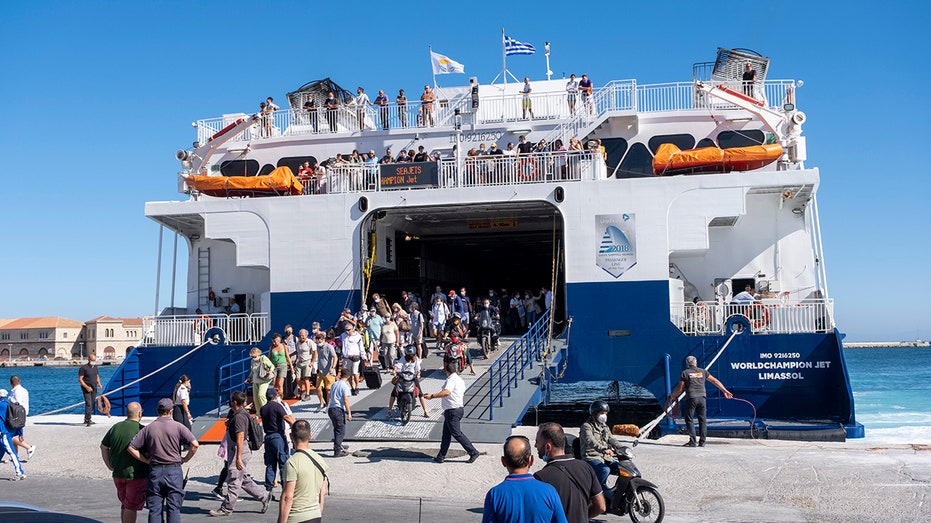
Tourists hopping between on high-speed ferries are reporting rough rides and brutal bouts of seasickness along the way.
Across social media, travelers this summer have been opening up about stories of rocky crossings, ill passengers and crews handing out sickness bags.
Given all the reports, the ferry has been dubbed the "vomit comet," according to The Wall Street Journal.
High-speed ferries are a popular choice for travelers looking to move quickly between Greece's islands, said Mina Agnos, founder and president of luxury travel company Travelive. "We see most clients looking for the quickest point from A to B," she said.
But the journey can turn rough when wind and sea conditions deteriorate, Agnos said, particularly around the Cyclades, where seasonal Meltemi winds can churn up the Aegean.
Greeces beaches, sunsets and rich history draw tourists in big numbers. Tourism rose about 21% from January through May versus the same period in 2025, according to the Bank of Greece.
Santorini alone drew roughly 3.4 million visitors in 2023, according to Fraport Greece and Santorinis Municipal Port Fund.
Yet the high-speed ferry rides can be stomach-churning for some tourists, according to a number of social media posts.
Some high-speed in Greece reach speeds of between 40 and 50 knots, roughly 46 to 58 miles per hour, according to the company website.
On popular routes between Athens and the Cyclades, high-speed vessels can reduce travel times by roughly half compared to conventional slow ferries, Greek ferry companies say.
But that speed comes with pitfalls, The Wall Street Journal reported.
High-speed ferries can feel bumpier in rough weather, while choppy seas can increase the likelihood of motion sickness, according to booking operator Direct Ferries.
Fox News Digital reached out to Seajets Ferries in Greece, one of the largest networks of high-speed and catamaran vessels in the Aegean Sea.
In a recent post in a Reddit thread dedicated to , one traveler expressed concern about taking a ferry from Piraeus to Naxos after reading numerous accounts of rough crossings.
The traveler said no one in the family was prone to seasickness, but they sought advice after encountering "nonstop seasick" anecdotes about passengers aboard faster ferries.
"I'm not prone to seasickness, but my stomach did not enjoy the fast ferry on a different route [Paros to Milos]," a Reddit user replied. "It's a different kind of motion sickness, and I guess you cannot really guess if you will get [nauseated] or not."
"Its a relatively windy area, so ferries can move quite a bit," another person said. "If people start feeling sick, it usually causes a domino effect."
A third person bluntly suggested, "Fly back ."
Last year, a Reddit post was entitled "Was this ferry from hell normal or just bad luck?" The person writing the post said, "The rocking and sloshing on this ferry to Milos was so violent I started vomiting within 15 minutes. I was horrified, but noticed others had started getting sick too."
Thousands of social media posts have called the boats "vomit comets" and your "worst nightmare," the Journal reported.
Agnos of Travelive, who splits her time between , disputed the idea that stomach-churning ferry rides are becoming more common, saying she believes social media is amplifying the issue.
"We've seen a huge surge in the number of people traveling to Greece," she said.
"As a res








 40.1c
40.1c