Southern African states push to keep mineral wealth at home
Southern African states push to keep mineral wealth at home
Leaders from the mineral-rich region have met for a summit on industrialization and trade and discussed cooperation with Russia
Southern African countries should process their critical minerals domestically instead of exporting raw materials that create wealth and manufacturing jobs elsewhere, the region’s top official has said.
Southern Africa is regarded as the continent’s richest and most diverse critical-minerals region. Members of the Southern African Development Community (SADC) hold major deposits of cobalt, copper, lithium, graphite, manganese and platinum-group metals, placing the bloc at the center of global competition for resources used in clean energy, electronics and military technology.
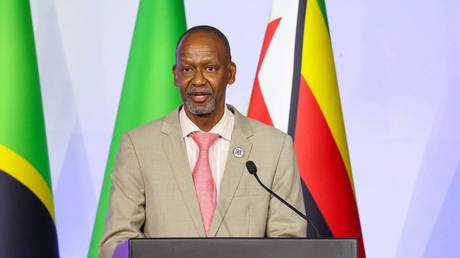
At the 16-member bloc’s summit in Durban, South Africa, on Monday, Executive Secretary Elias Magosi pressed leaders to turn that mineral wealth into industries and jobs.
We do not need permission from anyone to start this process. Let’s start now, he said.
South African President Cyril Ramaphosa made a similar appeal as his country assumed the SADC chairmanship. Despite the region’s mineral wealth, he said, we export the ore and import the battery, leaving Southern Africa to buy back processed goods at prices set abroad.
The Democratic Republic of the Congo (DR Congo), a SADC member since 1998, is the world’s leading cobalt producer and second-largest copper supplier. Zambia is another leading copper producer, while Zimbabwe, South Africa and Mozambique hold significant deposits of lithium, platinum-group metals and graphite, respectively.
The US has openly sought to curb China’s dominance of critical-mineral supply chains, making Southern Africa a focus of the competition for copper, cobalt, lithium and graphite.
China already controls major copper and cobalt operations in the DR Congo and has invested heavily in Zimbabwe’s lithium industry. Beijing is also funding a $1.4 billion refurbishment of the Tanzania-Zambia Railway, an export route linking Zambia’s mining belt to the Indian Ocean.
Washington and Brussels are backing the Lobito Corridor, a competing trade route linking mining areas in Zambia and the DR Congo to Angola’s Atlantic coast. The European Commission has said the project will help secure raw materials for Europe’s green and digital industries while creating jobs in Africa.
Several SADC members have restricted raw mineral exports to promote domestic processing. Earlier this year, Zimbabwe suspended exports of all raw minerals and lithium concentrate. Namibia has bans on exports of unprocessed lithium, cobalt, manganese, graphite and rare earths, with limited exemptions. Tanzania has required local mineral processing since 2017, while DR Congo banned copper and cobalt concentrate exports in June.
Read more In his on Monday, Ramaphosa said intensifying competition for strategic resources required Southern African countries to deepen economic cooperation, reduce non-tariff barriers and improve trade facilitation.
The bloc also steps to strengthen mutually beneficial cooperation with Russia on the sidelines of the summit. SADC said Deputy Executive Secretary for Regional Integration Angele Makombo N’Tumba met Tatiana Dovgalenko, director of the Russian Foreign Ministry’s Department for Partnership with Africa, on Sunday to advance a draft action plan under a 2018 cooperation agreement.
SADC said the proposed plan covers industrial development, trade, digital infrastructure, agriculture and technology. The two sides also discussed military-technical cooperation and preparations for the third Russia-Africa Summit.
© Facebook / SADC








 33.2c
33.2c