Angel Reese's Defensive Player of the Year win looks like WNBA media rewarding its own hype
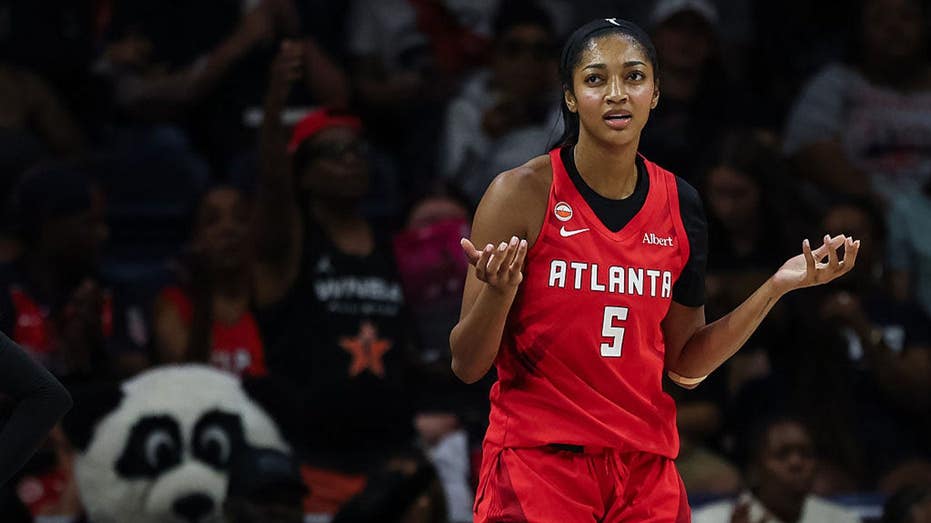
Angel Reese's Defensive Player of the Year win looks like WNBA media rewarding its own hype
Atlanta Dream forward Angel Reese deserved consideration for the WNBAs Defensive Player of the Year award. Her rebounding, effort and ability to force turnovers gave voters plenty of reasons to put her in the conversation.
Apparently, putting her in the conversation wasnt enough.
Reese received 46 of the 74 votes for the award announced Thursday. Golden State Valkyries forward Gabby Williams finished second with 20. Las Vegas Aces center Aja Wilson, the best defender in the WNBA as far as Im concerned, received four.
Four.
Reese received more than 11 times as many votes as Wilson and more than twice as many as Williams.
The result fits a suspicion Ive had about Reeses coverage for a long time: too many members of the media want her to be an elite player so badly that they oversell what she actually does.
An award decided by sportswriters and broadcasters gives them something convenient to point to when anyone questions that assessment.
"Of course shes elite. Look at the award we gave her."
The Dream finished 30-14 this season. They ranked third in defensive rating, allowing 103.5 points per 100 possessions.
A very good season. But how much better did Atlanta get after adding Reese this past offseason?
Last year, the Dream finished... 30-14. The exact same record as this season.
Surely the team's defense improved by adding the Defensive Player of the Year, right? Well, not exactly.
The Dream ranked second in defensive rating, allowing 98.9 points per 100 possessions in 2025. Atlanta already had one of the leagues best defenses before Reese arrived, and the team was actually a little worse defensively this year.
That doesnt mean Reese made Atlanta worse. Rosters change, opponents change and comparing defensive ratings across seasons requires accounting for many variables. But anyone selling her arrival as a dramatic transformation has to explain why the Dream finished with the same number of wins and a slightly worse defensive rating.
Reese helped Atlanta allow a league-low 9.5 second-chance points per game, she averaged an impressive 1.8 steals and she led the league in defensive win shares.
But she also joined a 30-win team that already played elite defense.
Wilson gives a defense options that Reese doesnt provide at the same level. She can protect the basket, switch onto a guard and defend a possession that takes her well away from the paint.
Against Indiana in August, Wilson guarded Caitlin Clark with the game on the line in overtime and forced the turnover that set up Chelsea Grays winning 3-pointer. Aces coach Becky Hammon said after the game: "Ill take that matchup … any day."
I don't think the Atlanta Dream want Reese trying to defend Clark on the perimeter with the game on the line. In fact, if that matchup happened, it would mean some very poor coaching and execution from the Dream.
Reeses activity around the basket is valuable, but Wilsons ability to handle that assignment is a major reason she's the league's best defender.
Wilson led the league in blocks for the fifth consecutive season, averaging 1.9 blocks per game, while Reese averaged just 0.7. Wilson actually averaged more defensive rebounds per game (7.5) than Reese (7.3), while adding 1.4 steals per game.
The defensive rebounding comparison tends to get lost amid the celebration of Reeses rebounding records. Of he





 31.5c
31.5c